Headcount: 52 (+1,200%)
Specialism: Midmarket MSP
HQ: NA
This “consulting-led technology partner” marks itself out from the crowd by operating without traditional offices, CEO Jason Osmond tells us (see below).
Only founded in 2021, its average monthly headcount hit 52 in the 12 months to 30 September 2025 (up from 32, 12 and four in the previous three years).
The Cisco, Fortinet, Rubrik, Arctic Wolf, Citrix and Microsoft partner specialises in cloud, AI, data, networking and security. Some 75% of its revenues are recurring in nature.
View the wider Fast-Growth 50 here.
Q&A with Forge Technologies CEO Jason Osmond
How have you been able to increase headcount in a flat market?
We’ve doubled our revenue year-on-year and grown our team to 52. Forge is founder-funded and 100% employee-owned, with no outside investors, and 100% of profits reinvested into the business. That allows us to take a long-term view of where we invest and how we grow as we continue to double year-on-year.
Increasingly, organisations are looking for partners who can connect business strategy with the practical delivery of technology transformation. Organisations may work with consultants to define growth, efficiency or resilience goals, while their IT teams and technology partners focus on infrastructure, security and operations. Both sides are doing valuable work, but they don’t always connect in a way that delivers the full outcome the business is aiming for. Our focus is on recruiting talent that can support bridging that gap. Advisors with lived experience of building and scaling businesses, alongside technologists who can translate strategic intent into practical, scalable platforms across AI, cloud, data, networking, automation and security. We then work with organisations to understand the outcomes they’re trying to achieve, translate that into a clear technology roadmap, and then deliver and operate the platforms required to support it.
Managed services are crucial to that. Many organisations no longer want a purely reactive support model. They’re looking for partners who can help operate and continually improve their environments across areas like cloud, networking, security, data and automation. At the same time, clients don’t want to hand over the keys to their environments. The most effective model is a collaborative one, where we work alongside internal teams, bringing additional expertise and capacity while the organisation retains ownership and control.
Ultimately, the combination of that model and growing demand for longer-term, outcome-focused partnerships is what has driven our continued investment in people.
What mega trend do you think will most shape the year for your company?
The biggest trend we expect to see is organisations moving from AI experimentation to AI delivering measurable business impact.
Over the past couple of years there has been huge enthusiasm around AI, with many organisations exploring what the technology is capable of and where it could be applied. The next phase is translating that experimentation into tangible outcomes such as operational efficiency, better decision-making and improved customer experience.
The organisations moving fastest are those treating AI as part of a broader business transformation rather than simply deploying new tools. They are starting with the outcomes they want to achieve and then applying AI, automation and data capabilities in a way that supports those goals. That’s where we tend to come in. Our role is helping organisations identify where AI can deliver the most practical value against business outcomes, building the data and platform foundations required to support it, and then integrating those capabilities into real operational workflows.
For many organisations, 2026 will be the year where AI moves beyond pilots and into scaled, outcome-driven programmes.
What’s a fact or quirk about your company most people won’t know about?
One thing people are often surprised by is that we operate without traditional offices. Our team is distributed across the UK, which allows us to hire the best talent regardless of location rather than limiting ourselves to a particular city. That approach has been intentional from the start and reflects the way many of our clients now operate themselves.
Rather than maintaining a central office footprint, we give our team access to flexible workspace through providers such as WeWork and Regus, alongside the option to work from home or closer to clients when that makes more sense. It gives people the flexibility to work where they’re most productive, while still having professional spaces available whenever they need them.
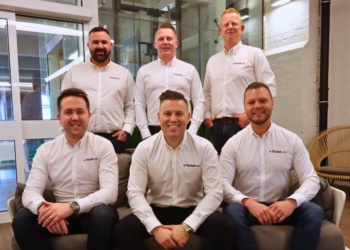
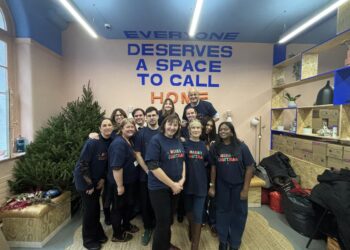
Importantly, it doesn’t mean we operate as a collection of individuals. We place a strong emphasis on bringing people together regularly, whether that’s team offsites, social events, industry events or simply getting together in person to collaborate on projects. The result is a model that combines flexibility with connection. Our people spend less time commuting and more time focused on customers, collaboration and delivery, while still maintaining a strong sense of team and culture. For us, it’s been a deliberate choice about how to build a modern technology company.
Does the rise of AI and automation make it less likely you’ll continue to add headcount at the same rate in the coming years?
If anything, we expect the opposite. AI and automation will increasingly take on operational tasks, but that doesn’t remove the need for experienced people. In reality, the model we’ll start to see emerge is human-led, agent-operated teams, where AI systems augment specialists rather than replace them. The technology can accelerate analysis, automate processes and surface insights, but organisations still need people with the experience to interpret that output, apply judgement and guide the business through change.
No one understands the realities of running a business like people who have actually done it. AI can process data and identify patterns, but it doesn’t yet have lived experience of leading organisations, navigating trade-offs or making strategic decisions in complex environments.
Ultimately, AI works best with humans in the loop. The companies that succeed will be those that combine automation with leadership, domain expertise and real-world experience. As a result, we expect demand for experienced technologists and advisors to continue growing, particularly those who can work alongside AI to guide organisations and drive better outcomes. AI doesn’t remove the need for people, it simply amplifies the impact of the right people.