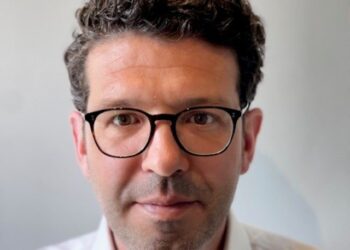

Role: CEO, Cyberfort
What’s been your business high point of the last 12 months?
Without doubt, it’s the progress we’ve made in harnessing the power of AI across the business. While we’re still at a relatively early stage in that journey, what’s already clear is the significant impact it can have – from streamlining operations to enhancing how we deliver for clients. The potential we’re seeing gives us real confidence in where it can take us over the next few years and getting that foundation right has been a genuine highlight.
Name one thing your company is looking to achieve in 2026
One of our key goals for 2026 is to firmly establish ourselves as the “Employer of Choice for Neurodiverse Employees” and it’s something we’re genuinely passionate about. We’re actively working to build an environment where neurodivergent talent isn’t just welcomed, but truly valued and supported. We’ve already made significant progress in this area, from the way we recruit through to how we structure roles and support our people day-to-day. For us, this isn’t a box-ticking exercise – it’s about building a stronger, more diverse business that benefits everyone.
What keeps you awake at night as a partner leader?
Honestly, the question that sits with me most is: ‘how do you build an enduring company culture in a world of remote working?’ It’s one of the defining challenges of modern leadership. Culture has always been the backbone of any successful business, but so much of it was built organically – through shared spaces, chance conversations, and the everyday moments that happen when people are actually together. When your team is apart, you have to be far more intentional about creating that. Getting it right means people feel genuinely connected to the mission and to each other, regardless of where they’re logging in from. Get it wrong, and you risk ending up with a group of individuals rather than a team. It’s something I think about a lot.
Is AI being over-hyped?
In short the answer is no. I genuinely believe AI is the most significant technology development of the past five years, and possibly much longer than that. Yes, there’s a lot of noise around it and not every claim lives up to scrutiny, but the underlying capability is real and it’s advancing fast. What we’re seeing isn’t a bubble – it’s a fundamental shift in how businesses operate, how problems get solved, and how value gets created. The organisations that treat it seriously now and invest in understanding how it applies to their world will be the ones with a real competitive edge. The hype may come and go, but the technology itself is here to stay.
What’s been your most successful internal AI project to date, and why?
Our AI agent has genuinely been a game-changer this year. We’ve deployed it across several areas of the business and the results have been really encouraging. Where it’s had the biggest impact is in reporting and data analysis – tasks that previously took considerable time and resource can now be done faster and with greater accuracy, which means our people can focus on the things that actually require human judgement. It’s also accelerated how quickly we can identify and implement process improvements, which in a fast-moving environment like ours makes a real difference. What makes it our most successful internal project is simple, it’s delivering tangible, visible results across the business, and we’re only scratching the surface of what it can do.
Can you share a surprising prediction about how UK IT channel partners or the UK IT channel will evolve over the next 5 years?
It may not be the most surprising prediction, but I think it’s one of the most important ones to pay attention to is that consolidation in the channel is going to continue and accelerate, particularly in the cyber partner space. The market is still quite fragmented, and as customer expectations rise, the complexity of what’s required to deliver genuine cyber security outcomes is increasing too. Smaller partners will find it harder to keep pace with the investment needed – in technology, in talent, and in compliance. That creates natural pressure toward consolidation, whether through acquisitions, mergers, or tighter partnerships. For those who get ahead of it and position themselves well, it represents a significant opportunity. For those who don’t, the next five years could be quite challenging.
Which tech gizmo (hardware or software) could you not function without?
It has to be my iPhone. I know it’s probably the most common answer you’ll hear, but there’s a reason for that – it really has become indispensable. It’s not just a phone anymore, it’s essentially my mobile command centre. Whether I’m staying on top of emails on the move, jumping on a call, keeping across the news, or managing my day, it’s always in my hand. I genuinely think it’s changed the way we all work and not always in ways we notice until you imagine being without it. Take it away and I think most business leaders would feel the impact within the hour.
Which three famous people, dead or alive, would you invite to a dinner party?
Easy one for me – Ian Botham, Ben Stokes and Andrew Flintoff.
Yes, I’m a cricket fan!
But beyond the sport, what those three have in common is that they’re not just great cricketers – they’re genuine characters and winners. Each of them has that rare ability to change the mood of a room, lead from the front under real pressure, and carry people with them. I think the conversation would be anything but dull. You’d have Botham’s larger-than-life stories from a golden era, Flintoff’s humour and heart, and Stokes bringing that quiet intensity and modern leadership perspective. I think we’d have an incredible night and I’d share a beer or two with them.
If you had a warning label, what would it say?
Mine would probably read: “Warning — may deliver feedback with more directness than expected.”
I’ve always believed that straight talking, done respectfully, is one of the most valuable things a leader can offer. People always know where they stand with me, and I think that builds trust over time even if it can catch people off guard initially.
Which tech figurehead has impressed you the most this year, and why?
For me it has to be Mike Norris at Computacenter. What he’s achieved in building Computacenter into a FTSE 100 company is genuinely remarkable. This is a UK-founded, channel-focused technology business that has grown into one of the most respected names in the industry and that doesn’t happen by accident or overnight. It takes vision, consistency, and the ability to execute over a very long period of time.
View the Oxygen Partner Leaders hub, powered by Giacom, here