AI will have a positive impact on how much MSPs can charge for their services, the CEO of non-profit trade association the Global Technology Industry Association (GTIA) has predicted.
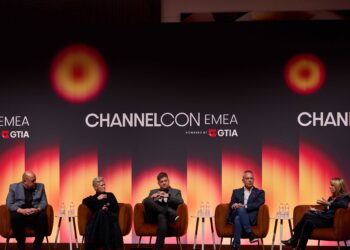
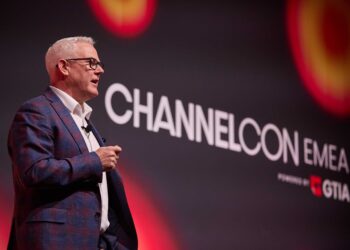
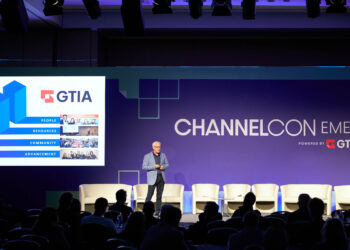
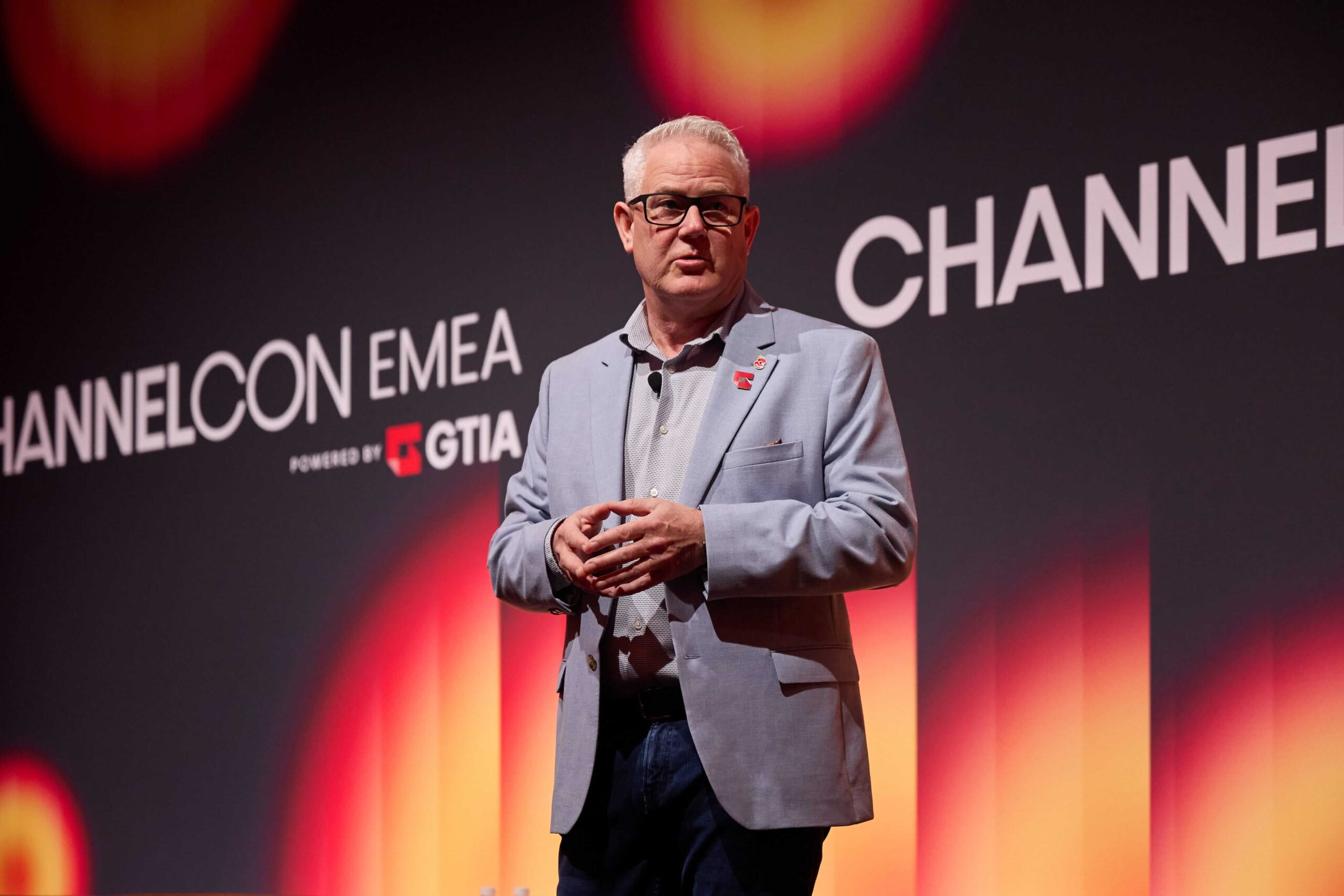
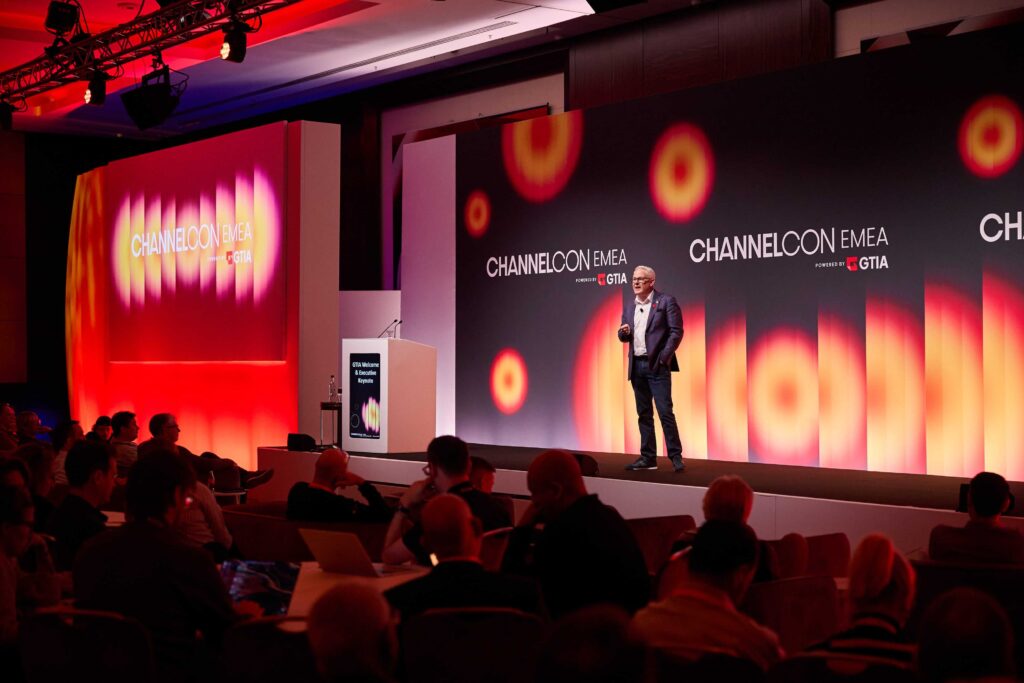
The GTIA’s ChannelCon EMEA event in London this week saw intense debate on how the role of MSPs might evolve as AI adoption accelerates.
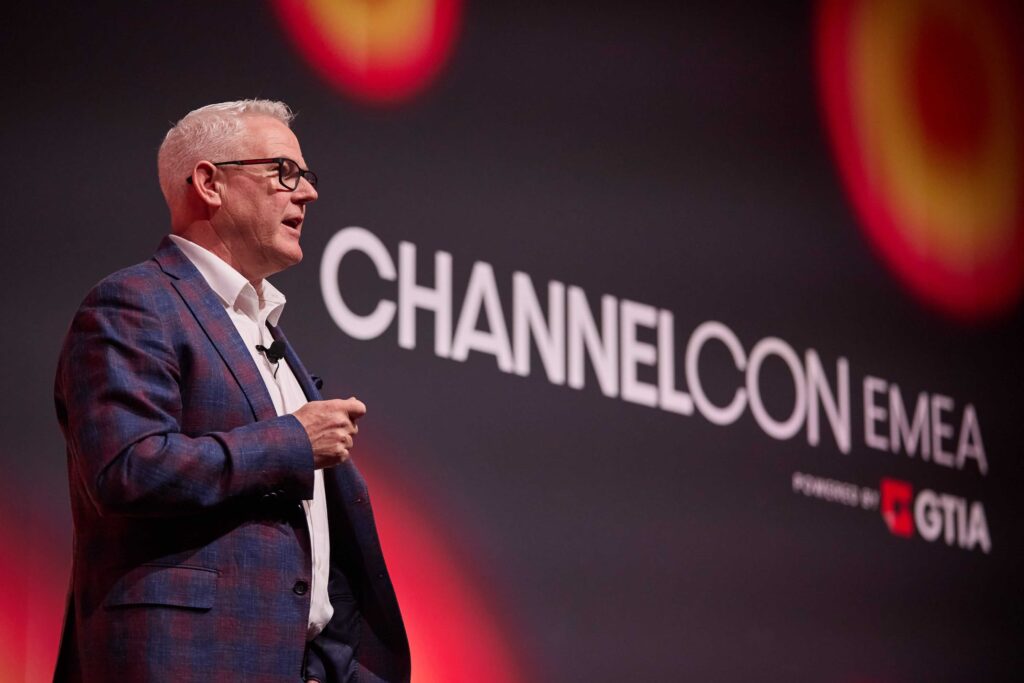
But talking to IT Channel Oxygen, GTIA CEO Dan Wensley confessed that he is a “pure optimist” on the topic.
The onset of AI will closely mirror the shift from break-fix to managed services by boosting the perceived value of IT providers, Wensley predicted.
“[At the time, we questioned] ‘how is the customer going to see my value if I’m fixing it remotely and they don’t see me as the hero when something breaks’?
“Guess what? The value went up; the perception of the customer increased,” he said.
“I truly believe AI is going to do the exact same thing – on steroids – for us.”
In the interview, Wensley also opened up on his key takeaways from the ChannelCon EMEA 2026 event, which drew in a record of nearly 800 registrations.
“A lot of [the new initiatives] are around the same themes of creating frameworks and standards,” he said, looking back on the previous day’s keynotes and announcements (see here).
“Whether it’s the Managed Intelligence Alliance or what we’re doing with CRITS [the Consortium for Responsible IT Services] and Texas A&M University – or even CompTIA’s AI Essentials – it’s all about training and knowledge.”
Asked how GTIA is planning to continue delivering benefits for its members in two years’ time, Wensley said it is all about increasing “outputs” around its recent announcements.
“We need to see utilisation of our assets at an all-time high,” he said.
“We do a lot of great things. [GTIA’s Vice President, Research and Market Intelligence] Carolyn April is an amazing researcher and analyst. Not enough MSPs were taking advantage or benefiting from her content, not because it isn’t great, but because we didn’t get it in their hands.
“I want to see more value being delivered to more members. It’s very clear.”
There has never been “a more important time as an industry to come together in peer-to-peer environments”, Wensley asserted.
“You can’t afford not to be in the room because everything’s happening so fast,” he said.
What else did Wensley say?
Read the full interview below…
Hi Dan. From everything the GTIA has covered on stage over the last two days, what’s the point you’d most like to hammer home?
That perhaps there is no more important a time as an industry and as a community to come together in peer-to-peer environments such as this.
We’re seeing it not only in the numbers that are coming, but – as [keynote speaker] Daniel Priestley said on stage – these businesses are being reinvented now every seven weeks.
All of the benefits we’ve taken over the last 30 years as a community are almost table stakes now. You can’t afford not to be in the room, because everything’s happening so fast.
The GTIA has announced a slew of new initiatives and member benefits at the event (see here). Are there any you’re particularly keen to call out as CEO?
A lot of them are around the same themes of creating frameworks and standards.
Whether it’s the Managed Intelligence Alliance or what we’re doing with CRITS [the Consortium for Responsible IT Services] and Texas A&M University – or even CompTIA’s AI Essentials – it’s all about training and knowledge.
It’s the same thing with the UN initiative [GTIA has been picked by the United Nations to host AI for Good in the UK and the US]. It came out of the UN identifying us as being able to highlight of some of the wins of members who are doing good things with AI.
What’s next in terms of how you raise the bar for the benefits you’re delivering to your members?
We’ve announced a lot of big initiatives, and in two years’ time, the outputs of those initiatives need to be realised.
Local Chapters [new member-led, GTIA-funded local meetings] is a great example. Just having more opportunities to meet is one thing. But I want to see some actual outcomes, not only just, ‘hey, big announcement, big initiative’. I need to see the results for the MSP.
We need to see utilisation of our assets at an all-time high.
We do a lot of great things. Carolyn April is an amazing researcher and analyst. Not enough MSPs were taking advantage or benefiting from her content, not because it isn’t great, but because we didn’t get it in their hands.
So I want to see more value being delivered to more members. It’s very clear.
How will the onset of AI tools that are in theory making MSPs more efficient impact what they charge their customers?
This is the challenge for this industry to overcome and talk about.
It’s so reminiscent of what we went through in the managed services evolution. When we came to [customers] with RMM and PSA tools and said, ‘go to recurring revenue models’, we were faced with the exact same questions and challenges.
[At the time, we questioned] ‘how is the customer going to see my value if I’m fixing it remotely and they don’t see me as the hero when something breaks’?
Guess what? The value went up; the perception of the customer increased.
The need and responsiveness and profitability of the MSP all increased, so it was a win for the customer and win for the MSP.
I truly believe AI is going to do the exact same thing – on steroids – for us.
It’s going to allow more efficiency. I think it’s going to drive employment, not decrease it, because the yield I can get out of $1 spent on a human is higher.
I can hire somebody new to do something, but their efficiency is so much better. So my return on that investment of the human has actually increased, not decreased. I’ll add another human because I can make more money.
Does that logic hold up if you consider that MSPs can potentially draw on AI to manage more seats than before – meaning there are fewer seats to go around overall?
If that’s the only common denominator, then yes, of course, there’s going to be diminishing returns for the number of MSPs out there. But there are also additional complexities. So as the complexity goes up, the value and revenue goes up.
I’m a pure optimist on this. I think it’s going to be good.
I think there’s going to be a lot of turmoil, a lot of figuring it out, a lot of price model discussions. But we’ve done this before, and that’s why I’m so excited to be the trade association helping to bring these people together to have these conversations and figure it out.
Are you worried about born-in-the-AI era MSPs popping up and aggressively undercutting existing MSPs?
The transition from break-fix to MSP was a harder job in some cases than for those who came in as pure-play MSP from day one, without the legacy.
But [the new, pure-play MSPs] didn’t have the customer relationships.
We’re talking a lot now about creating some operating standards for our industry. Those that have been doing it a long time are going to be in a much better position to bring that legacy experience to the table.
Is it a risk for some? Absolutely. Somebody can come in and undercut you because they’re hitting proficiency right out of the gate.
But they are also inhibited by not having a 10-year relationship with your customer. You do. So be at the table and don’t lose to them.
Do you have any predictions of how the market will pan out over the next 12 months?
It will be healthier than it is today.
Again, I’m the optimist. We’re in a heavy transition right now, but I think we will come out of the other side of that transition stronger, more profitable and delivering more value to SMBs than we ever have.
Is there anything else you’d like to highlight about GTIA’s work?
Beyond its work supporting the IT channel, GTIA also enables members to support charitable causes through its US$5m giving programme. Members submit funding applications, with a member council approving where the money goes.
I’m excited and proud of all the work we’re doing on the charity side. There’s an the opportunity for members to participate in their industry community while helping direct significant funding towards making an impact.
This article was produced in association with the GITA and is classified as partner content. What is partner content? See more here.