“The primary concern for the security market lies with ‘single-feature’ vendors”
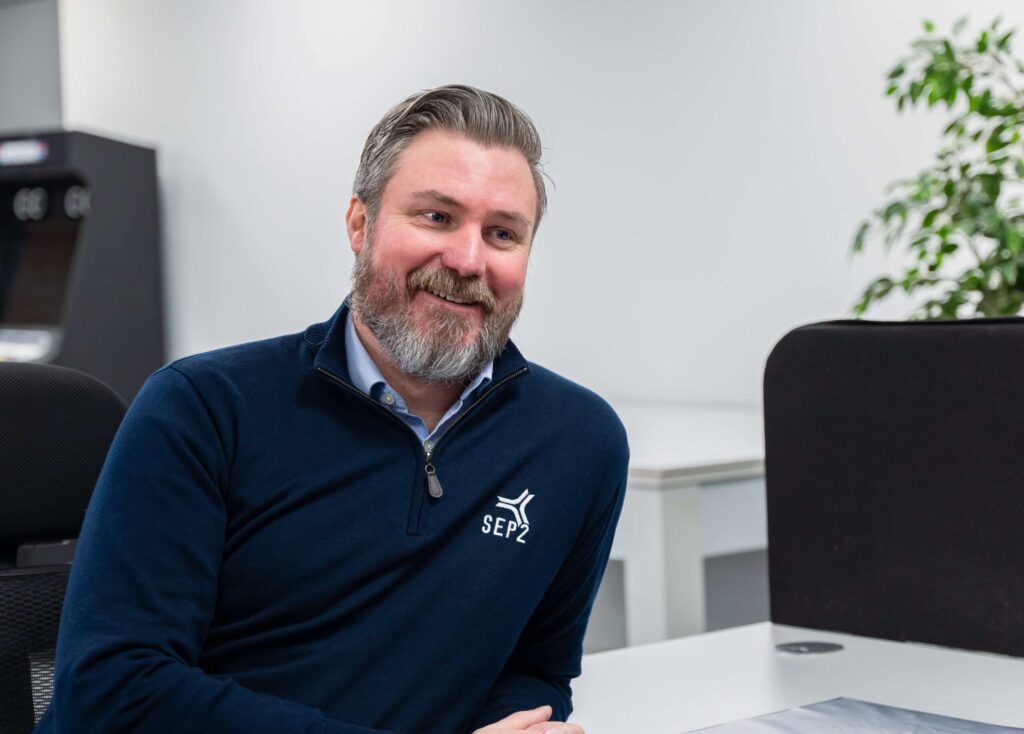
Paul Starr, CEO, SEP2
Are new AI tools like Claude Code Security a threat to cybersecurity vendors? Should the likes of CrowdStrike, Palo, Okta and Zscaler be worried?
Cybersecurity has always been an arms race. The speed of “replacement” has accelerated, but the fundamental law remains: Platforms beat features. The primary concern for the security market lies with “single-feature” vendors that lack a comprehensive solution strategy. For established players like CrowdStrike and Okta, the challenge is not survival in the age of AI, but rather positioning themselves as the orchestrators of this technology. We are not heading towards a future where AI replaces humans; instead, we will see “AI-powered experts” capable of achieving unprecedented speeds in defence.
The emergence of AI capabilities may potentially render certain specialist software vendors obsolete. A vendor that focuses on a niche where AI can consistently deliver mature outcomes with greater efficiency or at a significantly lower cost will be compelled to innovate and remain ahead of technological advancements. However, this dynamic is simply the continuation of the natural, ongoing evolution within the cybersecurity and wider IT markets.
Historically, a vendor would introduce a niche feature which would either be expanded into a larger suite, be acquired by a competitor to form such a suite, or eventually disappear for lack of momentum. While AI may accelerate the speed at which a vendor is “replaced”, the underlying principle remains a fundamental reality of market economics.
As a dedicated MSSP, SEP2 is strategically evaluating the role of AI in our domain. Our focus is on understanding how our vendor partners are best utilising AI, which is particularly evident in our collaboration with Google. We are observing monthly enhancements to the implementation of Gemini within Google’s security suite. This allows us to identify optimal methods for leveraging these advancements to enhance our service delivery, maintaining a “human in the loop” approach to ensure maximum benefit for our customers.
As an MSSP leader, do you foresee a future where you use, or help clients use, these new AI tools as part of a wider cybersecurity strategy?
I absolutely foresee a future where these tools are a central pillar of our strategy. However, the way we use them is critical. At SEP2, we often say we are “Tech Driven, People Powered,” and that philosophy becomes even more important with AI.
At SEP2, our role isn’t simply utilising AI models like Claude and Gemini. We are embedding these capabilities to shift our focus from discrete “point solutions” to integrated, orchestrated security. This accelerates remediation. For example, using tools like Claude Code allows us to not only identify a vulnerability but also to provide the exact, verified code fix within seconds, significantly reducing the attack window.
However, this adoption introduces the critical challenge of “shadow AI,” the modern-day equivalent of shadow IT. We are tasked with helping clients secure their own AI usage to prevent proprietary data from inadvertently being absorbed into public models.
While a Large Language Model (LLM) can efficiently scan massive volumes of code, it takes a security expert to assess a client’s risk tolerance and regulatory landscape to determine if a security finding warrants a significant business intervention. As an MSSP, we go beyond merely using AI. We are not just adapting to the rise of AI, we are actively leveraging it to solve the “new problems” it generates, such as automated vulnerability discovery by threat actors or sophisticated AI generated attacks.
Article continues on following page…