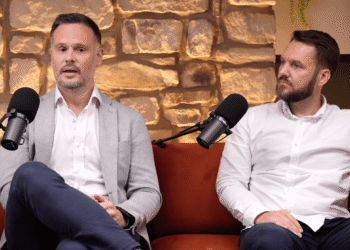
Channel Edge duo hail resilience of distribution
The top 50 ‘Must-Know’ UK IT distributors and marketplaces of 2026 were revealed this morning in IT Channel Oxygen’s latest annual report on the sector.
Distribution has enjoyed a return to glory this year, with revenue growth among our half-century of power players accelerating to 12.5% in their latest years on record. Discover the identity of the top 50 here.
Here, Michelle Marshall and Nathan Long, Client Directors at report sponsor Channel Edge, discuss some of the key top-line findings from the report, which can be downloaded here….
Why is Channel Edge backing Oxygen’s Must-Know Distributors and Marketplaces report?
MM
Distribution plays such a fundamental role in the technology channel, and it’s an area we’ve worked closely with for many years.
What interests us isn’t just the scale of distribution, but the position it holds in connecting vendors, partners and ultimately customers. There’s enormous potential in those relationships, particularly as the market becomes more complex and businesses look for new ways to grow.
At Channel Edge, we’re passionate about helping channel businesses turn that potential into meaningful commercial outcomes. Supporting a report that explores the changing distribution landscape felt like a natural fit, and it’s an opportunity to contribute to a conversation we feel strongly about.
What leapt out at you from the findings of the report?
MM
For me, it was the resilience of distribution, particularly given the pace of change and the challenges the industry has faced.
But beyond the numbers, I think the findings raise an interesting question about what comes next.
Distribution has already demonstrated its relevance and importance to the channel. It has extensive partner relationships, access to multiple technologies, significant market knowledge and the ability to influence how solutions reach customers.
The opportunity now is to use that position more strategically. It’s not simply about how many partners you can reach, but how effectively you understand, support and enable them to grow.
NL

One thing that stood out to me was the growth reported by TD SYNNEX, alongside the work we’re seeing distributors put into making their partner engagement more effective.
I also think the role distribution plays in supporting smaller partners is particularly important. Whether that’s offering alternative financial arrangements or providing access to technical expertise, distributors can help regional resellers compete for opportunities they might otherwise struggle to access.
And that benefits vendors too, because it helps them reach smaller, localised customers who might otherwise go under the radar.
As a marketing agency, what’s your view of distribution and its evolving role in the channel ecosystem?
MM
I think distribution has an opportunity to become an even more strategic growth enabler within the channel.
Having worked in channel marketing for over a decade, I’ve seen how programmes can become very vendor-led. That’s understandable when vendors are providing the investment, but it doesn’t always mean we’re starting with what partners actually need.
Distribution is uniquely positioned because it has visibility across so many vendors, technologies and partner audiences. There’s a real opportunity to use that insight to connect the dots, identify shared challenges and develop more relevant, targeted programmes.
I’d also like to see distribution look beyond the usual established relationships and create more opportunities for smaller or developing partners and vendors.
There’s real potential in bringing complementary vendors together through more joined-up programmes, particularly where individual budgets or resources might otherwise limit what’s possible. Distribution is uniquely placed to make those connections.
And I think we need to have a more honest conversation about marketing investment. We know there are opportunities to make better use of MDF, whether that’s funding that goes unclaimed, budgets that are underutilised or activity that’s driven by spending deadlines rather than a clear commercial objective.
We should be much more intentional about where that investment goes. Who are we trying to influence? What behaviour do we want to change? And how will sales and marketing work together to achieve a commercial outcome?
For me, that’s where distribution can create even greater value, moving beyond connecting businesses to genuinely helping them develop capabilities, differentiate and grow.
NL
We’re already seeing that evolution through the work we’re doing at Channel Edge.
Over the past year, we’ve increasingly supported distributors with programmes that go beyond traditional vendor-funded campaigns, including practical, face-to-face sales training and enablement.
What’s really valuable about those sessions is seeing the relationships between reseller sales teams and distribution specialists firsthand.
Salespeople feel comfortable asking questions about product specifications, availability and wider customer opportunities. Having direct access to someone who understands the products and the supply chain gives them greater confidence when speaking to their own customers.
It’s a good example of distribution adding value beyond the transaction itself.
What was the most surprising fact or figure from the report?
MM

What really stood out to me was the fact that 40 of the 45 distributors reporting revenue had grown. Given the challenges the industry has faced, I think that demonstrates just how resilient distribution continues to be. [Figure to be confirmed against the final report.]
We often focus on the pressures facing distribution, whether that’s changing business models, increasing competition or the pace of technological change. But the report also highlights the strength and resilience of the sector.
I think that’s encouraging, and it reinforces the opportunity ahead. The challenge isn’t simply sustaining momentum but translating that strength into greater value for the wider partner ecosystem.
Have you got any predictions for IT distribution in 2027?
MM
I think we’ll see increasing pressure on distribution to demonstrate value beyond fulfilment, product availability and partner reach.
Technology is evolving at an extraordinary pace, and for many partners, keeping up is a challenge in itself. As technologies converge and customer requirements become more complex, partners need support not just to understand what’s new, but to recognise where the opportunities lie, build expertise and develop propositions that solve wider customer problems.
I think distribution has a real opportunity to lead that conversation rather than simply respond to it.
I expect we’ll see greater emphasis on insight-led partner engagement, more accountability around marketing investment and closer alignment between sales and marketing.
I’d also like to see more collaboration across complementary vendors.
Customers don’t think in individual vendor silos, and there’s an opportunity for distribution to bring together technologies, expertise and resources in ways that help partners deliver more complete solutions.
NL
I think a lot depends on whether distributors maintain the momentum they’ve built and continue expanding their support across the whole partner ecosystem.
It’s important that growth and engagement aren’t concentrated solely around the largest resellers. Smaller, regional partners need access to the same quality of expertise, support and opportunities, even if that engagement looks different depending on their needs.
If distributors continue investing in those relationships and making themselves genuinely valuable to partners of all sizes, I think they’re well positioned to build on the resilience we’re seeing in this year’s report.
MM
Ultimately, I believe the distributors that stand out in 2027 will be those that understand their partners best, help them navigate complexity and turn opportunities into tangible commercial growth.
Download Oxygen Must-Know Distributors and Marketplaces 2026 here.