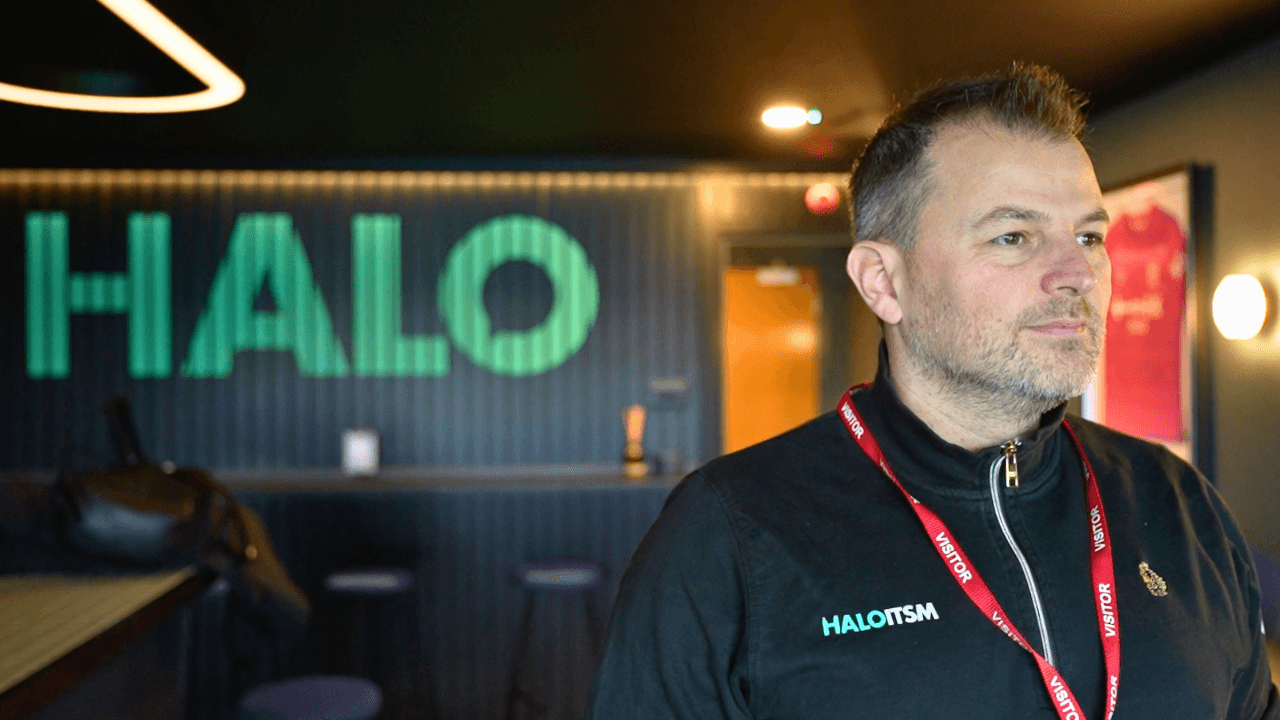
HALO will be the “market leader” within a decade, its CEO has asserted as he revealed why it just committed to continuously cutting prices in line with its growth.
Talking to IT Channel Oxygen, Paul Hamilton also gave an update on the Suffolk-based enterprise software vendor’s channel push, claiming partners have gone from “ghosting” HALO to “all wanting a piece of the pie”.
HALO this month unveiled ‘ARR Milestones’, which sees it commit to progressively reducing its licensing prices in line with its growth.
It launches at around £100m ARR with a 5% licence reduction, with further 5% increments set to kick in at £250m, £500m, £750m and £1bn.
The move comes as HALO prepares to up sticks to a new HQ in Ipswich, after outgrowing its current Stowmarket hub.
“We believe we’ll be the market leader,” Hamilton said.
“Roll forward ten years, we believe every company of more than 500 people will be using HALO technology in some shape or form.”
“Why is it okay to raise prices?”
ARR Milestones goes against the grain in an enterprise software industry typically associated with raising rather than reducing prices over time, Hamilton claimed.
“I would challenge anyone and ask, ‘why does anyone think it’s okay to raise the price?’” he said.
The two main costs involved in producing software – namely infrastructure and engineering costs – will naturally fall per customer as HALO grows, Hamilton said.
HALO’s infrastructure costs currently stand at 17% and are about to fall to 13.5%, Hamilton said.
As its revenues progress towards £1bn, HALO will unlock discounts of up to 30% with its infrastructure provider AWS, he added.
HALO’s software engineering costs currently stand at around 3%, and will also fall per customer due to Brooks Law (which states that “adding manpower to a late software project makes it later”), according to Hamilton.
“We stopped recruiting software engineers about two years ago,” Hamilton said.
“We thought, ‘do you know what? We’re actually at that sweet spot where we’re already out-developing the competition’.”
HALO has always been profitable, meaning it does not need to cover losses sustained in previous years, Hamilton added.
“When it was just me developing, I’d make enough for my livelihood. And then I’d think, ‘I’ve got enough to hire someone’,” he said.
“The profit margin used to be about 70%. It’s probably 40% after tax in terms of EBITDA now, but it’s always been profitable.”
Suffolk’s “sexiest” employer
Despite characterising it as “the best thing we’ve ever done”, Hamilton conceded his decision to set up shop in rural Suffolk was a “fluke”.
“I was flying around the world, here, there and everywhere, installing help desks, and I just needed a laptop for the internet,” he recalled.
“That’s when I started working out of my mother-in-law’s spare bedroom in Cedars Park in Stowmarket.”
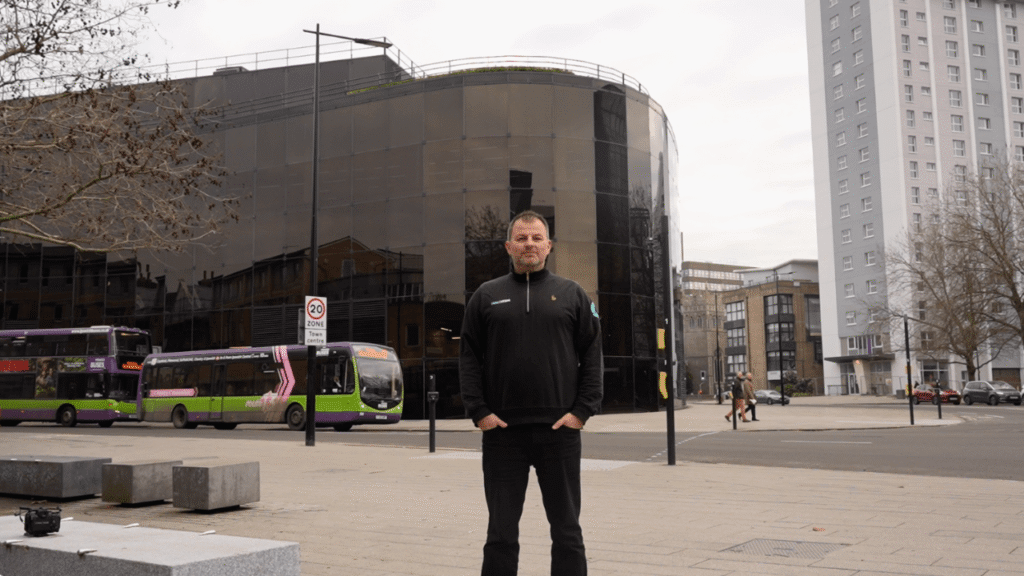
But HALO is now doubling down on the East Anglian county, this month inking a deal to move into the Norman Foster-designed Willis Building in Ipswich during 2026. It could house as many as 1,000 graduates by 2030, Hamilton claimed.
“We’re the opposite of herd mentality,” he said.
“The best thing [about Suffolk] as an employer, is that there’s no competition. If you’re a graduate in Suffolk, and you want to stay in Suffolk and work for one of the world’s most progressive companies, there’s only one option.
“It might have been BT 20 years in Adastral Park. Now it’s HALO.
“I think we’ve taken that mantle as being Suffolk’s number-one sexiest employer.”
“I was absolutely ghosted”
HALO’s channel revenues have doubled over the last 12 months, Hamilton claimed, although he conceded it has made swifter inroads among VARs and MSPs than the GSIs that will land it the very largest enterprise deals.
“Over 20% of revenue is via the channel, but there’s still so much potential for that to grow,” he said.
“The GSIs only work with market leaders. Your Accentures, Deloittes and EYs will continue offering Salesforce and ServiceNow for a while to come – we’re under no illusion that we’re just going to start doing hundreds of millions of business with them.
“But if you start to go below that, we’ve got some real momentum.
“We had a big partner event in September 2023 and tried to get a load of partners to come along. I was sending messages and just being absolutely ghosted.
“Now, they all want a piece of the pie.”

Doug Woodburn is editor of IT Channel Oxygen