“Assent — and you are sane —
Demur — you’re straightway dangerous —”
— Emily Dickinson, Much Madness is divinest Sense
I’ve spent much of my career in the technology channel, an industry that I genuinely love. It’s given me extraordinary opportunities, lifelong friendships, a few battle scars and more than my fair share of experiences that have shaped the person and leader I am today.
I’ve worked alongside some brilliant people, both men and women, and some of the greatest champions of my career have been men. I’ve seen the industry evolve, watched more women take their rightful places in leadership and celebrated the growing recognition of the talent, experience and perspective women bring to our sector.
And yet, every now and then, something happens that makes me wonder how much of the old culture still sits quietly beneath the surface.
Not always something dramatic or deliberately offensive. Sometimes it’s a passing comment, an assumption, a joke that makes you wince internally while everyone else laughs, or a moment when you find yourself wondering whether to say something or simply let it pass.
More often than I’d care to admit, I’ve chosen the latter.
There’s an unwritten etiquette to working in a male-dominated industry. Nobody hands you the rules when you arrive, but you learn them remarkably quickly. You learn which comments are meant to be funny, which personalities are best left unchallenged, and how to distinguish between a moment worth confronting and one that will simply make everyone uncomfortable if you do.
You learn to read the room, choose your battles and occasionally laugh along, not because you agree with what’s been said, but because challenging it can feel more exhausting than simply moving on.
And somewhere along the way, you become rather good at it.
I don’t think I’d ever really stopped to consider quite how much energy that takes. How much effort goes into making other people’s behaviour comfortable, into deciding whether something is worth addressing, into ensuring that your own reaction doesn’t become more of a problem than the comment that prompted it.
What an extraordinary expectation, when you think about it.
And what an uncomfortable thing to admit that I’ve spent years accommodating it myself.
I don’t believe every ill-judged joke is evidence of deep-rooted misogyny, nor do I think every man who makes an inappropriate comment is deliberately trying to diminish women. I’ve laughed at plenty of things I probably shouldn’t have, and I’m certainly not suggesting that workplaces need to become humourless environments where everyone is terrified of saying the wrong thing.
But I do think we need to ask ourselves why some behaviours have become so normalised that questioning them feels more uncomfortable than allowing them to continue.
And perhaps more importantly, who has traditionally been expected to absorb that discomfort.
It’s a question that becomes even more interesting when you consider how much our industry has changed, and how we measure that progress.
We’ve become very good at celebrating the number of women around the leadership table. We count female executives, board members and senior appointments. We applaud organisations that demonstrate progress, and rightly so. Representation matters, particularly in an industry where women have historically been underrepresented.
But I wonder whether we’ve become so focused on who gets invited into the room that we’ve stopped questioning what happens once they’re there.
Because being present in a conversation isn’t necessarily the same as being heard. And being heard isn’t always the same as having the opportunity to influence what happens next.
I’ve seen some wonderful examples of leadership throughout my career, where different perspectives are actively sought, where disagreement is welcomed and where the strength of an idea matters far more than who happens to have suggested it.
But I’ve also seen how easily established ways of working can shape whose opinions are sought, whose ideas gain momentum and whose voices carry the greatest weight.
Often these things aren’t deliberate. They grow out of familiarity, longstanding relationships, shared experiences and the natural tendency to turn towards the people whose judgement we already know and trust.
And there’s nothing inherently wrong with those relationships. They’re part of how businesses work.
But I think it’s worth asking whether familiarity sometimes becomes a substitute for seeking a different perspective. Whether we occasionally mistake agreement for alignment, or assume that because someone has been included in a discussion, they’ve had a meaningful opportunity to contribute.
It’s a subtle distinction, but an important one.
There’s a significant difference between being informed about a direction and having the opportunity to help shape it.
One gives you visibility. The other gives you influence.
And I sometimes wonder whether we’ve mistaken the first for the second.
We’ve spent years encouraging women to step forward, to be more confident, to put themselves forward for promotions, to speak up in meetings and to claim their place at the table. I’ve offered that advice myself, and I still believe in much of it.
But perhaps we’ve placed too much responsibility on women to navigate the environments they’re entering, and not enough on questioning whether those environments have evolved to make room for different voices and perspectives.
Maya Angelou asked in Still I Rise:
“Does my haughtiness offend you?”
There’s something wonderfully defiant about that question, particularly when you consider how differently confidence and assertiveness can sometimes be interpreted depending on who is displaying them.
I’ve met women who are extraordinarily capable, experienced and accomplished, yet who still feel the need to consider how their opinions will be received before expressing them. Whether being direct will be mistaken for being difficult. Whether challenging an idea will be seen as constructive or confrontational. Whether refusing to laugh at something inappropriate will earn them a reputation for having no sense of humour.
And I wonder how many men spend the same amount of time making those calculations.
Not because men don’t experience exclusion, insecurity or workplace politics. Of course they do. But because the unwritten rules of belonging have historically been shaped by the people who have held the greatest influence, and in our industry, those people have predominantly been men.
None of this is to diminish the progress we’ve made. There are organisations and leaders who genuinely understand that inclusion requires more than representation, and I’ve been fortunate enough to experience that throughout my career.
But progress isn’t the same as completion.
Having more women in senior positions is important. Recognising their achievements is important. Encouraging the next generation of women into technology is important.
Yet none of those things automatically changes the assumptions that shape whose opinions are sought, the behaviours people have learned to accept as simply part of the culture, or the quieter expectations about how people should conduct themselves if they want to fit in.
And perhaps that’s what I’ve been thinking about most recently.
Not whether women are capable of succeeding in the channel. We’ve demonstrated that beyond any reasonable doubt.
But whether, after all these years, we’re still asking women to become exceptionally good at navigating a culture that hasn’t always been willing to question itself.
I don’t have a neat answer to that. And I certainly don’t think it’s something that can be solved by another initiative, another policy or another photograph celebrating the diversity of a leadership team.
I do think it begins with a little more honesty about the difference between representation and influence, between being welcomed and being heard, and between having a seat at the table and genuinely belonging there.
Because perhaps the real measure of progress isn’t simply how many women we’ve invited into the room.
It’s whether we’ve created an environment where their presence genuinely changes the conversation.

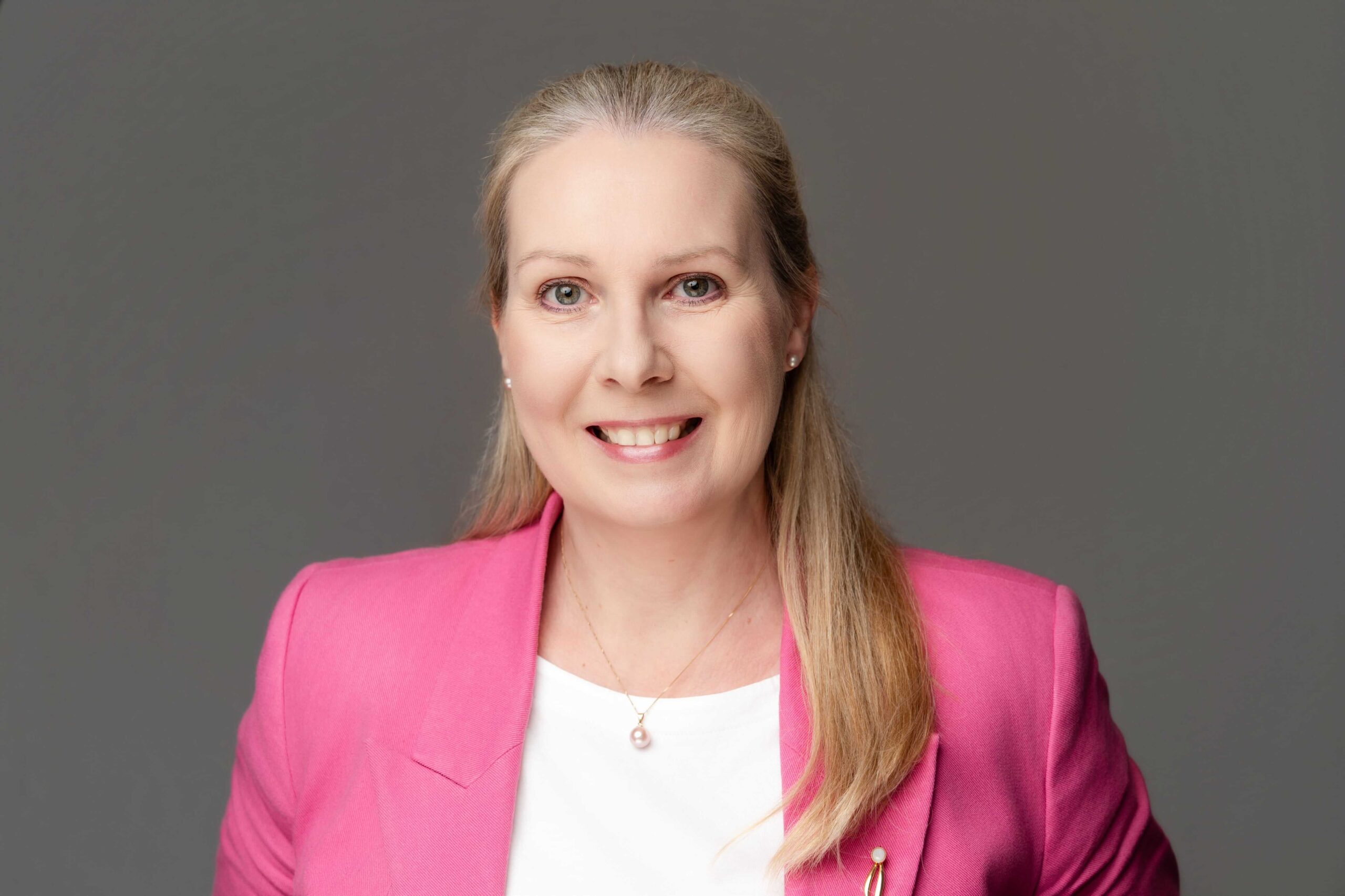
Louise Mahrra
Louise Mahrra is a marketing strategist and channel expert.
She is the founder of The Marketing Human, a blog exploring how real human connection powers better marketing, especially in the IT and channel space.