I’ve found myself going back to poetry recently. Not in any structured or analytical way, but in those quieter moments where something lands and stays with you, even if you can’t immediately explain why.
There are two poems I’ve carried with me for years. One is If by Rudyard Kipling. The other is Clancy of the Overflow by Banjo Paterson. They have always felt very different to me, almost like they sit at opposite ends of a spectrum, but I’ve started to realise they are both describing something that shows up repeatedly in leadership, particularly in the environments many of us are operating in across the channel.
If, is the voice most of us recognise. It speaks to composure, self-trust and resilience. It’s the version of you that stays steady when things around you are uncertain or noisy, that can make decisions without having all the answers, and that continues to move forward even when challenged. In many ways, it reflects the default expectation placed on leaders today, especially in high-growth, high-change businesses where the pace rarely slows and the margin for error can feel small.
Clancy, on the other hand, represents something much less structured. For me, it is tied closely to growing up in Australia and having a very real sense of what those wide, open landscapes feel like. It is not just about physical space, but about the absence of pressure and expectation. It’s a state where you are not constantly anticipating what comes next or holding multiple threads in your head. I find a version of that now when I’m out on my bike, without a route or a plan, just moving through open roads with enough space for my thinking to quieten. It is often in those moments that things which felt complex or heavy earlier in the day start to make more sense, not because I have actively worked through them, but because I have given myself enough distance from them.
For a long time, I saw these as two separate modes: one grounded in control and responsibility, the other in freedom and escape. What I have come to realise more recently is that both are necessary, but neither is sufficient on its own.
There is a third state that sits alongside them, and it is one we talk about far less. I came across it through The Peace of Wild Things by Wendell Berry, which captures the idea of stepping away from the constant mental load of anticipating, planning and carrying everything at once. The line that stayed with me was the notion of not taxing our lives with forethought of grief. It’s a simple way of describing something quite profound: the ability to put things down, even temporarily, rather than continuously running ahead of reality.
Why this matters in marketing leadership
There is a growing conversation around what leadership needs to look like in this next phase of the channel, often framed in terms of courage, navigation and human-first thinking. What sits beneath that, though, is something more fundamental: the state we are operating in when we make decisions, set direction and lead others.
In the channel, most of us spend the majority of our time in what I would now describe as the “control” state. We are focused on delivery, on pipeline, on performance, and on making decisions that have real commercial impact. This is where accountability sits, and it is where we feel most aligned to the expectations of the business.
However, if everything is processed through that lens, it starts to narrow how we think. Strategy becomes more reactive, shaped by immediate pressures rather than longer-term perspective. Creativity becomes constrained, because there is little room to step back far enough to see what is really going on. Over time, it can also become mentally unsustainable, not necessarily because of workload alone, but because of the constant internal processing that comes with it.
In practical terms, this shows up in ways most of us will recognise. Marketing plans that default to short-term pipeline generation at the expense of longer-term positioning. Campaigns that are shaped by internal pressure rather than customer reality. Leadership teams that are aligned on targets, but not always on perspective. When we operate almost exclusively in control, we optimise for delivery, but we can lose the space required to see what actually needs to change.
The moments where clarity and original thinking emerge are often much closer to the “freedom” state. They happen when there is enough space to think differently, or sometimes not to think at all. Equally, the ability to sustain performance over time is closely linked to that third state, where you are able to step out of the cycle of constant anticipation and allow your mind to reset.
A more fluid way of operating
What these three states highlight is that effective leadership is not about operating at a constant level of control. It is about recognising which state is required for the situation you are in, and allowing yourself to move between them.
Control enables execution and decision-making. Freedom creates the conditions for insight and perspective. Release allows both to be sustained over time without becoming overwhelming.
In practice, this is less about formal frameworks and more about awareness. It is noticing when you are spending too long in one mode, particularly when everything starts to feel compressed or reactive, and deliberately creating space to shift out of it.
We often talk about high performance as if it is something that can be maintained at a constant level, but in reality it is more fluid than that. Different types of thinking require different conditions, and part of the role of leadership is creating those conditions, not just for your team, but for yourself.
Perhaps the more useful question, then, is not simply how we perform under pressure, but whether we are operating in the right state for the kind of thinking and leadership that is actually needed in that moment.
Because the risk isn’t that we lose control. It’s that we rely on it so heavily that we stop noticing what it’s costing us, not just personally, but in the quality of the decisions, strategy and growth we are responsible for driving.

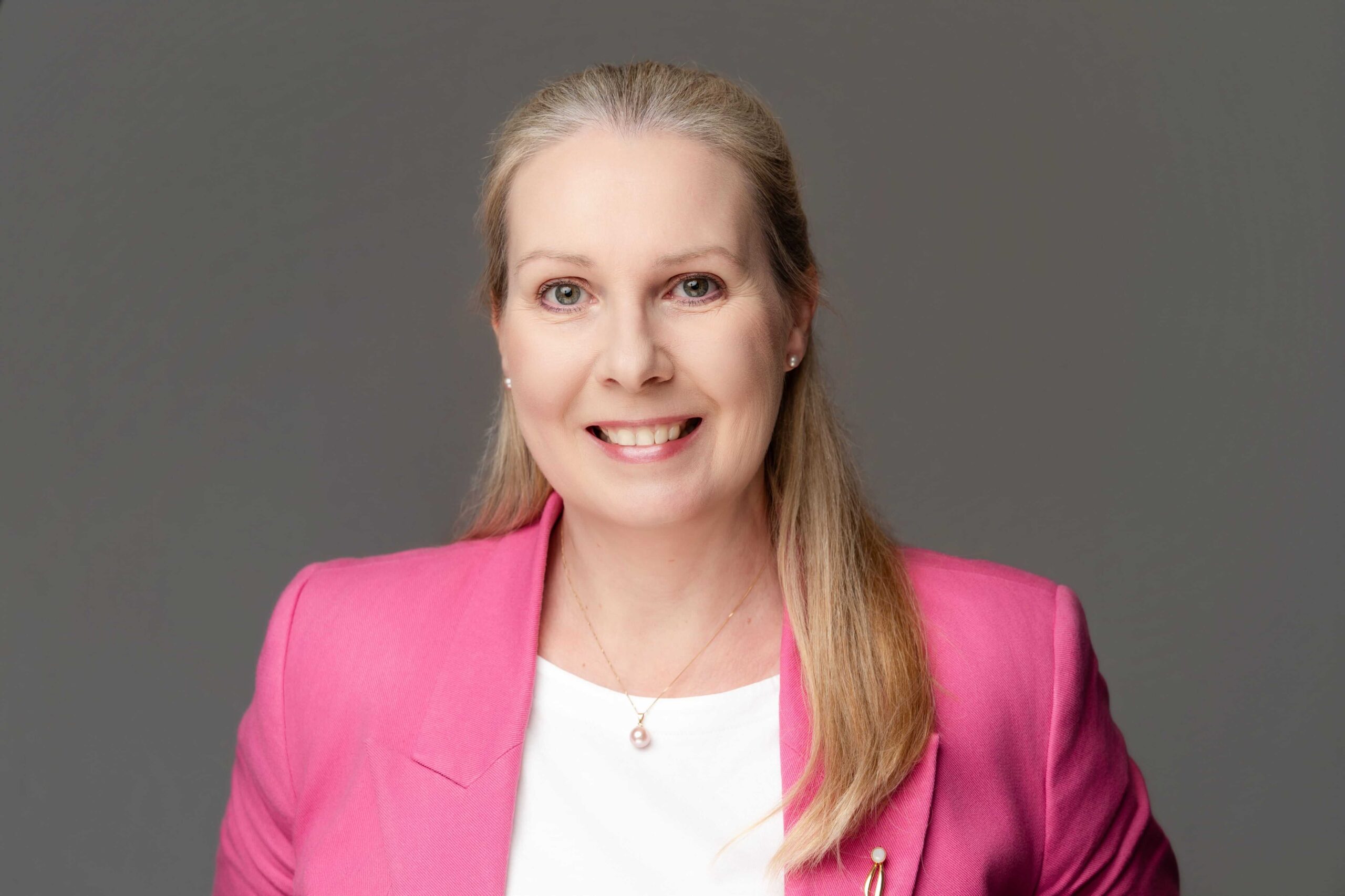
Louise Mahrra
Louise Mahrra is a marketing strategist and channel expert.
She is the founder of The Marketing Human, a blog exploring how real human connection powers better marketing, especially in the IT and channel space.