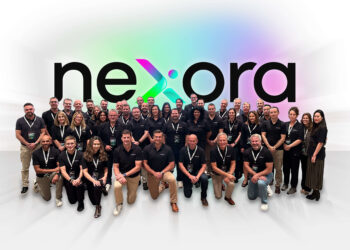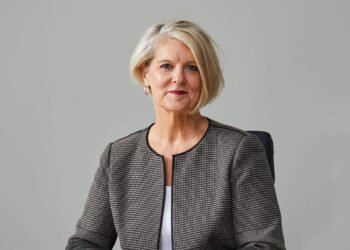

Elovade “doesn’t want to become a Pax8,” its CEO stressed as he teased the imminent launch of its new marketplace and potential M&A in France.
The Germany-headquartered cybersecurity and MSP software distributor is built on nine acquisitions of regional VADs, including Thirsk-based Brigantia – which last month rebranded as Elovade UK.
Talking to IT Channel Oxygen, Elovade CEO Philip Weber revealed the 250-employee outfit is gearing up to launch a “state-of-the-art” marketplace that includes not only licensing and subscription software, but also its enablement services and own cloud offering.
It is set to launch in DACH later this year, before being rolled to the UK and other countries over the following six to eight months.
Clocking up revenues of €122.5m in 2025, Elovade is striving to position itself between Pax8 and smaller in-country VADs, Weber said.
“We don’t want to become a Pax8,” he said of the US-based cloud commerce marketplace that has built huge scale globally via acquisitive and organic growth.
“Our aim is to stay the trusted advisor of the partner with a highly sophisticated platform for them to use.”
Elovade’s relatively small vendor set – the 32 vendor logos featured on its homepage include Heimdal, Keeper, Sendmarc and Paessler – is its “biggest differentiator” over Pax8 and broadliners such as TD Synnex and Ingram, Weber said.



“Our technical people really need to be able to explain the product in detail. That’s not possible if you have 400 vendors,” he said.
“We weren’t dressed for the occasion”
Weber was installed as private equity-backed Elovade’s CEO in 2021 when it made its first acquisition of German Ebertlang. The distributor now operates across DACH, the UK, Nordics and Italy.
Before this, he helped build up email archiving vendor MailStore, which was one of Ebertlang’s key vendors and remains Elovade’s largest group vendor.
“I knew a lot of the companies we acquired because they used to be my distributors,” recalled Weber, who describes himself as an “entrepreneur rather than a manager”.
In contrast, the engagement with Brigantia began with a cold contact over LinkedIn followed by a meeting at an English gentleman’s club.
“We weren’t really dressed for the occasion; we were pretty casual – so it was quite an experience for us,” Weber recalled.
“I immediately felt that these were two founders who have that passion and think the exact same way we do.”
“Best entry we’ve ever had”
Weber described the Brigantia acquisition as “the best entry we’ve ever had”, saying its young team in Thirsk reminded him of the “spirit” within Ebertlang.
“The UK and Germany are very much alike – the difference with Sweden or Italy is way bigger,” he said of the local cultural differences.
“Germany prefers on-prem in a lot of ways, whereas here it’s cloud first. The UK is a bit ahead, but from the general go-to-market the feeling was very much alike.”
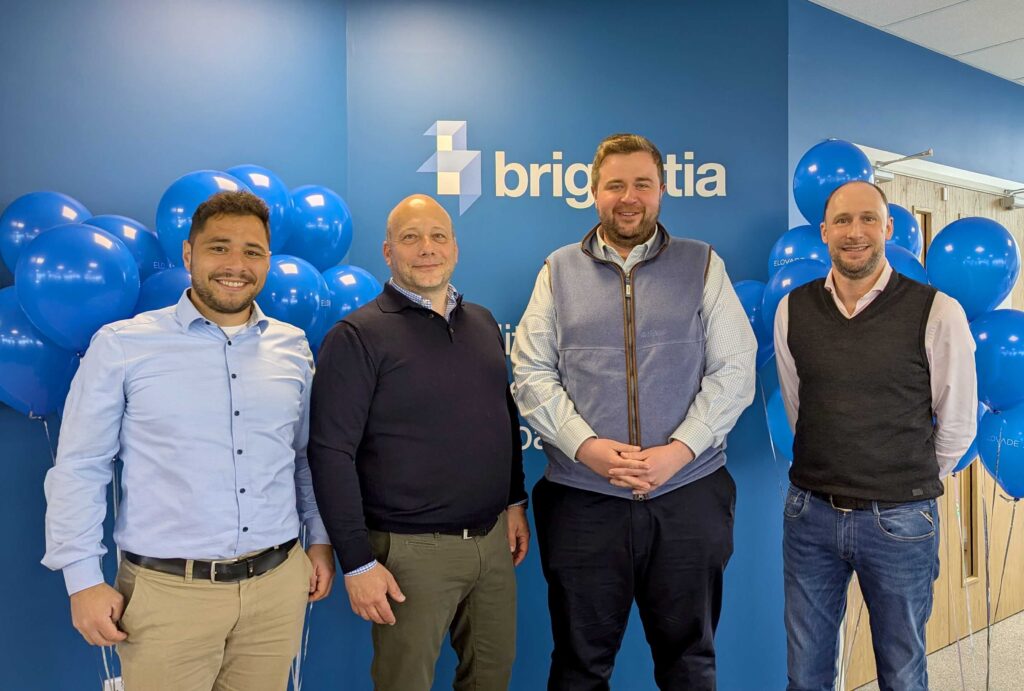
Elovade – which is backed by two “mid-cap investors” – has a “totally different approach” to M&A than its peer, Jonas Etz, Director Corporate Development & M&A at Elovade, explained.
“We are not the guys coming and telling you how to do your business,” Etz said.
“We try and learn, because we’re not the expert in the UK market or the Irish market.”
“Everything facing the customer – marketing, go-to-market – stays in region because, like Jonas said, they are the regional experts. That’s why we bought the company – it couldn’t make sense otherwise,” Weber concurred.
Although France is the obvious chink in Elovade’s western European coverage, Weber conceded finding the right target there is “not easy”.
“France is interesting for us; Benelux also,” he said.
“We’re looking into Eastern Europe, including Poland – it’s very much up and coming.”
AI launch
Asked about the technologies Elovade is betting on over the next 12 months, Weber said SSL certificate management will become a “big topic” in 2027 as the renewal period begins to shrink.
Elovade has just launched two AI vendors in the form of nexos.ai and Rencore, marking its entry into that category, Weber revealed, meanwhile.
“We’ve put a lot of work into finding the right vendors for our MSP partners,” he confided.
“The end customers are using different tools without control, without management, so to help the partners deal with it we tried [the tools] ourselves and are now happy to launch.”

Doug Woodburn is editor of IT Channel Oxygen