
A Scottish social enterprise MSP with no owners or way of distributing profits has snubbed offers from three competitors “wanting to take us out of the market”, its founder has revealed.
Since it was founded in 2016, WePurpose Technology has trained 26 apprentices that have gone on to work in the IT sector.
Talking to IT Channel Oxygen, founder David Massey characterised the Inverness-based outfit – which currently has nine employees – as being “very, very different from most normal MSPs”.
He got in touch with IT Channel Oxygen after spotting our article rounding up 34 UK MSPs that have converted to B Corp status.
“We’re a company limited by guarantee, and we have an asset lock that ensures nobody financially gains from the trade of the business,” Massey explained.
“That’s the bit that fundamentally sets us apart from every other MSP, which is why I believe we go further than B Corp.”
Despite this, some 96% of WePurpose’s revenues to date have been generated by trade revenue, rather than grants. Massey said.
“Make us your apprentice”
Massey started WePurpose Technology in 2016 in response to a growing tech talent issue he’d identified in the Highlands of Scotland – which spans a third of the country’s land mass.



“We went from having 13 full-time computer science teachers to having three,” he recalled.
“If a young person wanted to be able to take computer science at secondary school, they weren’t going to be able to do that unless they happened to be in one of those three schools.
“We had a growing problem with the IT sector being able to recruit new people.”
At the same time, just 14 of the circa 360 technology providers that operate across the Highlands and Islands have more than five staff, Massey said.
“Zenzero, Focus Group and Capgemini all operate here. When we take those out of the mix, we’re now down to very, very small IT providers who are constrained by time and experience,” he said.
“I wanted to create a socially-driven MSP that addresses that economic issue and social problem around getting young people to come into the IT industry; not by looking at qualifications, but actually just meeting the person and making sure they’ve got the right aptitude and attitude.”
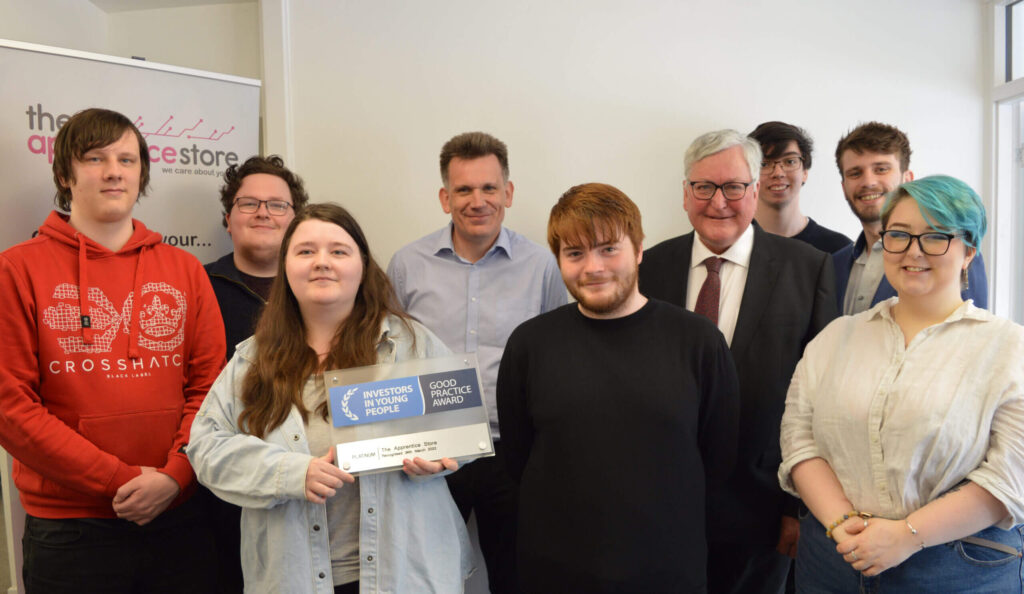
Many of WePurpose’s clients are small businesses who want to engage with local young people and develop digital skills, but who aren’t geared up to take on an apprentice themselves, Massey said.
“They’ve got a technology project, but that might only last two weeks or six months,” he explained.
“Our value proposition to our client is: ‘make us your apprentice’. We’re multi-skilled, multi-disciplined, we’re never sick, and we’re never on holiday.”
“We don’t work with the hospitality sector”
Although Microsoft and Acronis partner WePurpose serves one client with 35,000 seats, its average customer has just 13 staff.
Some 42% of its revenues comes from the third sector.
Its three senior staff have 36, 20 and 18 years’ experience, with its six trainees each having up to six years of service under their belt (the longest serving of these was previously a window cleaner).
WePurpose’s social enterprise status means there are some limits to the services it offers, former RAF programmer Massey acknowledged.
“Some people want to get a contract with us because they want access to me. But if there’s no opportunity for us to engage with young people in that process, we’re not going to do it,” he explained.
“We don’t work with the hospitality sector because we can’t respond in the way they expect us to respond,” Massey added.
“It’s their very immediate, here-and-now response, and a lot of our work needs to be planned. Whilst we do have a responsive helpdesk, the tiering and the way we operate allows for some thinking time to be able to deliver it.”
‘They wanted to buy us to take us out’
While social enterprises typically strive to generate 30% of their revenues from trade, for WePurpose that figure is as high as 96%, Massey said.
“We are sustainable through trade alone,” he said.
“We could commercialise it. My non-exec board has turned down three offers for organisations to buy us, and the reason they wanted to buy us was to take it out of the market – because they saw us as a risk because of our strong social purpose.”
Massey was quick to praise the growing trend of MSPs converting to B Corp status.
“As an industry, we’ve perhaps been focused on profit over purpose,” Massey said.
“To change the articles of association in order to have those values embedded in the way they operate is really good.
“We go beyond that, because it’s the reason we exist as a purpose; technology is just what we do.”
“Other MSPs not as open as we are”
Massey also opened up on WePurpose Technology’s decision to rebrand from the ‘Apprentice Store’ on its tenth anniversary last month, acknowledging that the word ‘apprentice’ was stoking misconceptions in the market.
“The first perception problem was, ‘why would I speak to a training business about my technology?’,” Massey said.
“The next perception was that, because the core of our workforce are in the first four years of their IT career that they don’t have any experience.
“The third perception was that we didn’t have any continuity of service for our clients.
“The fourth perception, which we only ever heard from charities, was that because we’re a third-sector organisation, the quality of our services was worse than second grade. That was more of a reflection of if they were to commercialise their services than the quality of service that we deliver.”
Were any of those perceptions fair?
“The first one we knew existed – the other ones were not fair,” Massey responded.
“In order to be able to deliver our commercial-grade managed services using young people, we have to have that backed up by experience and processes to make sure we are delivering a consistent quality of service.
“There are many MSPs that engage with young and inexperienced people, and train them, but perhaps are not as open about it as we are.”

Doug Woodburn is editor of IT Channel Oxygen