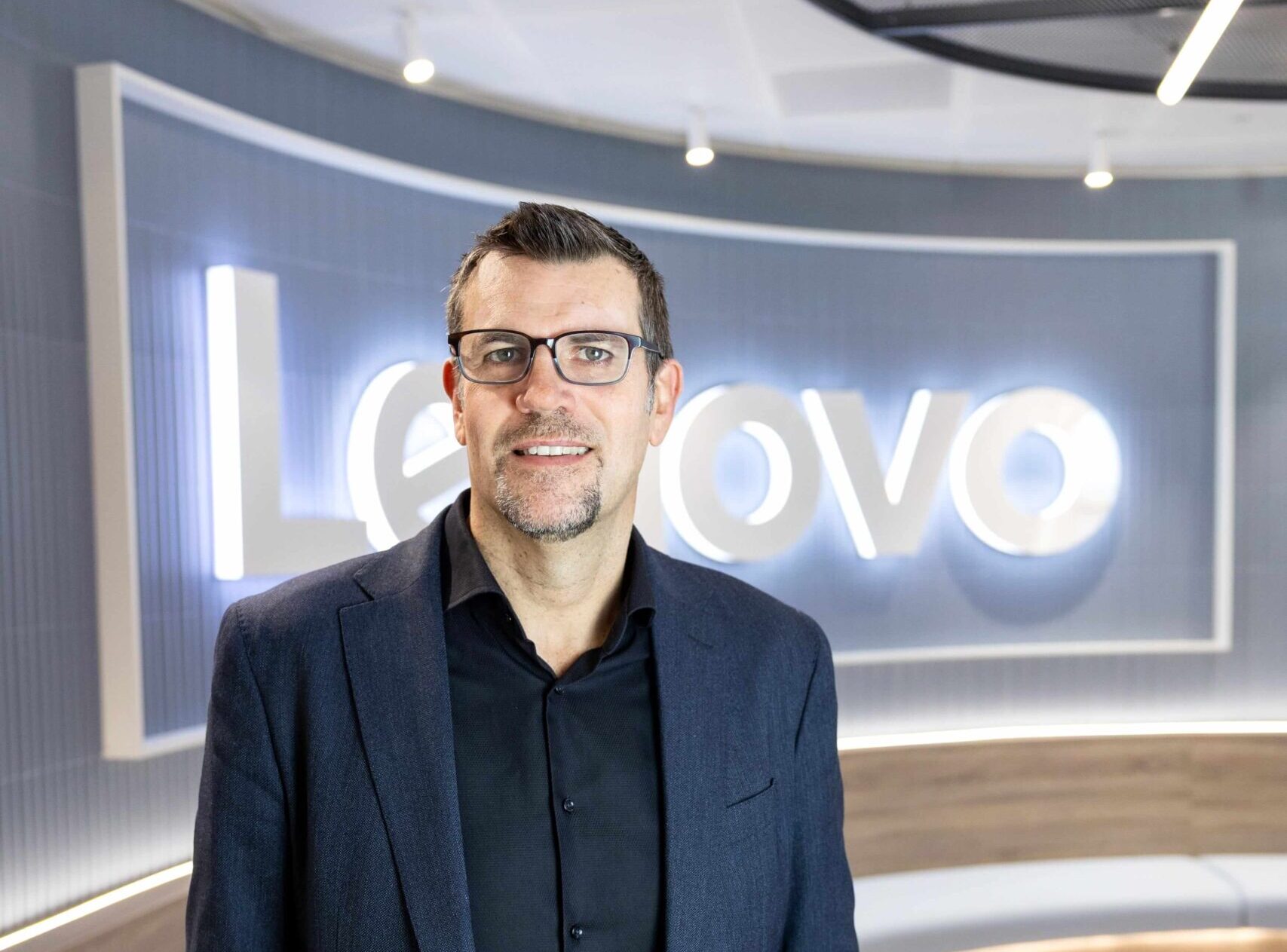
The inflationary environment for IT hardware could last for another “couple of years”, Lenovo’s UKI MD predicted as he claimed its recent World Cup involvement has “boosted” its standing among partners.
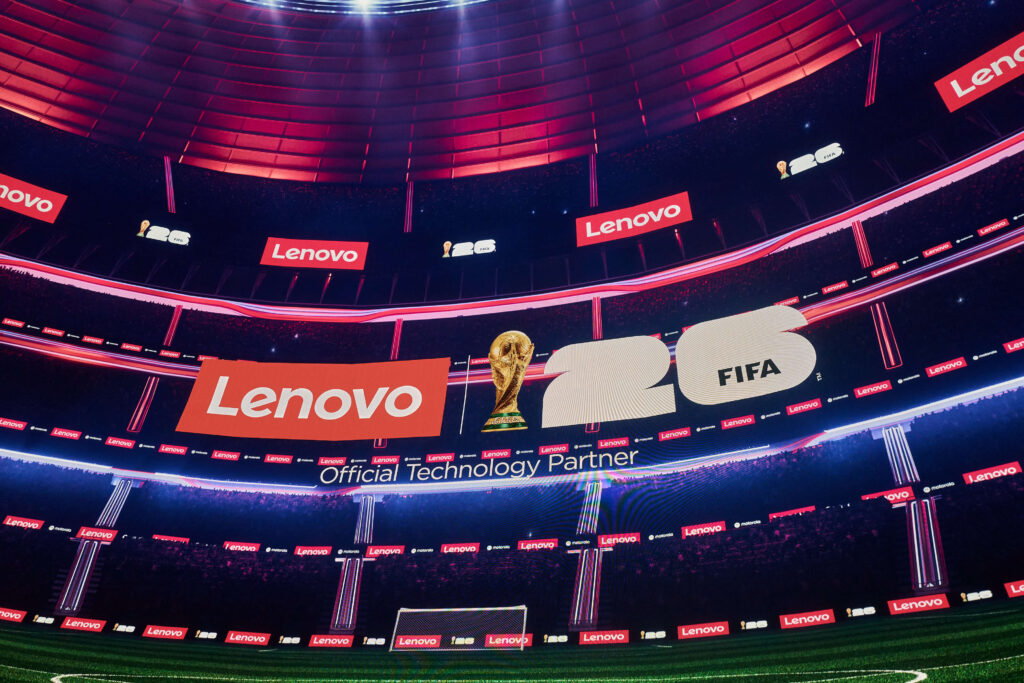
Talking to IT Channel Oxygen, Andy Rhodes said Lenovo’s role as the World Cup’s official Technology Partner enabled it to “expose the true breadth of our capabilities”.
“We’re well known as the number-one PC brand in the world; we’re less well known as that datacentre player,” he said.
With this in mind, Lenovo flew out “a lot” of UK&I partners this summer to witness its World Cup tech – including the ‘FIFA AI Pro’ post-match analysis assistant – in action, Rhodes revealed.
“The ball had a sensor in it. We collected all the data, put it in a large language model, and then every team could access it,” he said.
“They could ask it, ‘hey, I’m Cape Verde, I’m playing Brazil, can you show me their defensive weaknesses?’”
“It was absolutely not just a sponsorship or branding deal,” Rhodes added.
“Where all of the value in my mind came from was helping FIFA across their whole business, and then showcasing that to our channel and our customers.
“That’s where the boost is really coming from.”
“We’re constantly going to have to tweak our Ts and Cs”
Noting the current “inflationary environment” for IT hardware, Rhodes urged customers to “think differently” when it comes to the traditional three- five-year PC refresh cycle.
But a greater emphasis on leasing, asset recovery and second-user IT shouldn’t come at the expense of putting “the latest and greatest technology” in customers’ hands, Rhodes said.
“Every time I hear a customer say, ‘I cannot in the current environment afford to refresh all my PCs to AI-enabled PCs’, my immediate reaction is, ‘you’ll get left behind’. The delta between an AI-enabled PC and normal PC is huge.
“That’s why it’s important to get that message out there about all these options to help customers refresh their fleet, including software tools showing you which profile owners or people are hitting the top end of that PC capability and need a refresh.
“Sweating the asset, I understand it financially, but it doesn’t really make sense if you want to remain competitive.”
Rhodes claimed Lenovo has “probably been the most transparent” of all the vendors when it comes to its pricing policies since the memory crunch first hit late last year.
Competitors including Cisco and HPE have moved to introduce more severe partner Ts and Cs in response to AI-fuelled supply constraints and escalating costs (although the latter recently restored a longer quote validity window and reversed its controversial repricing policy on sub $1m orders).
“We took the price increase to the partners and our customers probably earlier than anyone else, and we’re at 30 days on our business right now,” Rhodes said.

But Rhodes said Lenovo is keeping a watching brief on its Ts and Cs as he warned that he didn’t see costs coming down “any time soon”.
“This is a longer-term phenomenon driven by the oversubscribing of memory in the industry,” Rhodes said.
“If you just look at what’s driving that, the datacentre is still unabated in terms of demand, driven by AI and especially these hyperscalers.
“And then when you look at things like electric cars and new sources of memory requirement, even with new fabs coming online in the memory space we’re not going to see that change dramatically any time soon.
“I think we’re going to be in an inflationary environment probably over the next couple of years still, and so we’re constantly going to have to tweak our Ts and Cs working with the channel as we move forward.”
“One of the reasons I came back to Lenovo”
Rhodes joined Lenovo in April after spending the two previous two-and-a-half decades in various leadership positions at HP and Dell.
“I actually spent 18 months on sabbatical,” he said.
“When I decided to go back to work, I looked around the industry and said, ‘okay, where can I bring those skillsets to bear, whether it’s datacentre or PC?’ I’ve done sales, I’ve done product development and product management. Running a country, you have to understand the product side, and the customer and channel side – and I’d known a lot of the senior leadership at Lenovo for multiple years.”
To continue driving up its share price, Lenovo must expand its datacentre and services offering via the channel, Rhodes said.
“I think we’ve got an amazing portfolio, but we need to put more of the go-to-market in place to allow our partner network to take advantage of that,” he said.
“One of the reasons I came back to Lenovo is its end-to-end portfolio.
“We have a lot of channel partners that have been very loyal and have built their businesses with us on the PC side.
“Now as we continue to bring our datacentre portfolio to bear, we can help them cross sell.”

Doug Woodburn is editor of IT Channel Oxygen