

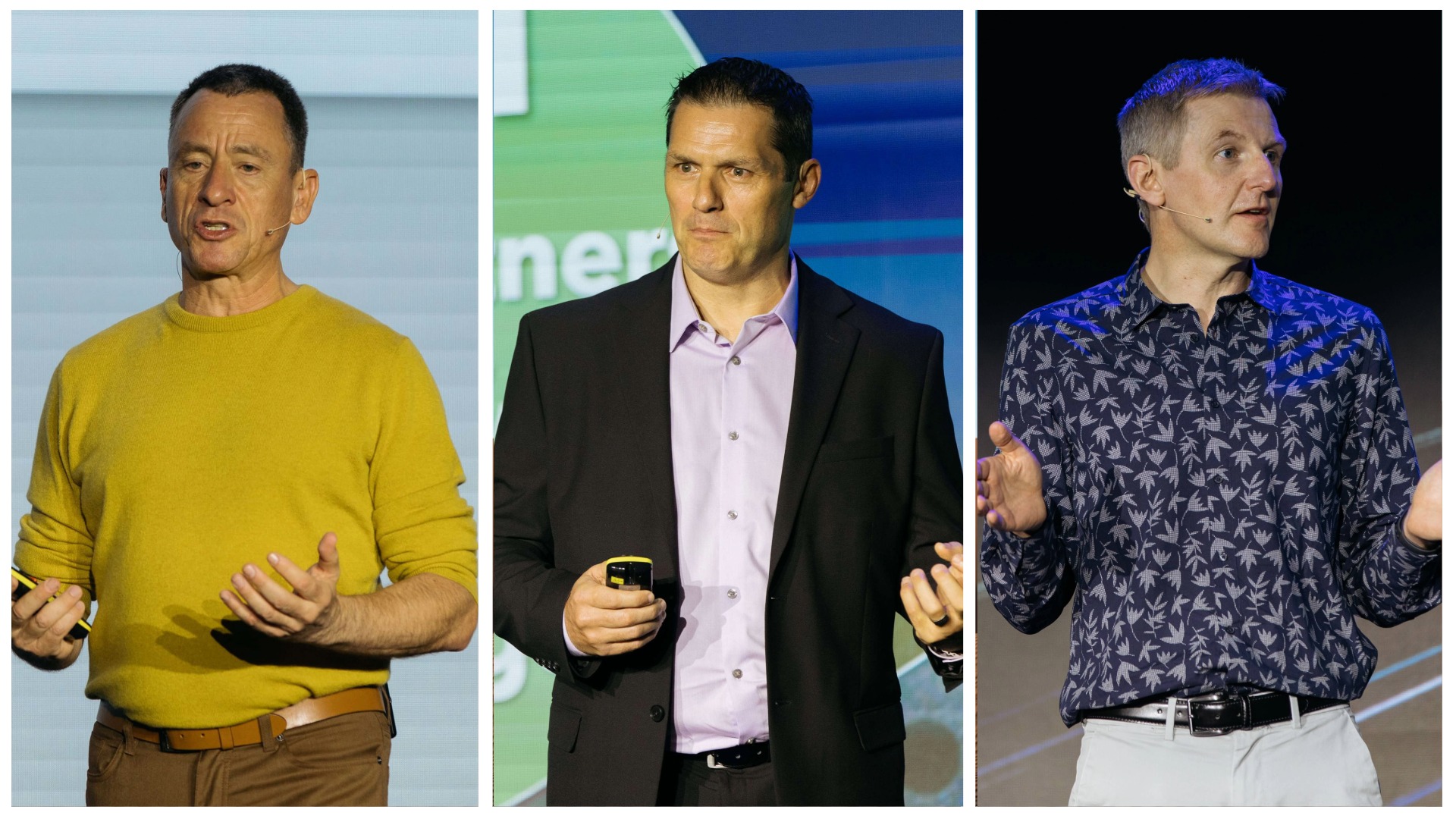
Canalys Forums this morning recorded a first in its 19-year history as two of its top analysts clashed over whether partners should be going all in on hardware.
In his opening keynote at the Barcelona event, Canapii co-founder and Informa Fellow Steve Brazier argued that the money in AI today for the channel lies in building datacentres, not developing AI services.
“Those of you involved in buying PCs, servers, or any other products with semi-conductors in, stock up your warehouse now,” he urged.
“The value of those products will increase over the next 12 months. You’ll make a lot of money if your warehouses are filled – these shortages are baked in because the datacentre is baked in.”
On the other hand, partners setting themselves up as AI consultants, who “go into customers and tell them what to do with AI”, have a dim future, according to Brazier.
“We think you’ll fail; most of you will fail,” he said.
The AI opportunity for partners lies in “AI routing”, for example in areas such such as helping customers with how to budget, how to keep their data secure, and which model to use, Brazier went on to say.
“I’m going to disagree with the opening keynote”
But in a marked break from convention, Omdia Chief Analyst Jay McBain just a few minutes later pointedly disagreed with Brazier, who founded Canalys in 1998 before selling it to Omdia parent Informa in 2023.
“For the first time in 19 years, I’m going to disagree with the opening keynote,” McBain said.
“I don’t think it’s a five-year strategy to load up a warehouse with hardware – there’s geopolitics, price inflation, supply challenges, tariffs that come in on a daily basis, or the threat of tariffs.
“Yes, you can make more money [on hardware] today. It’s a point-in-time opportunity, but I wouldn’t be making a three- to five-year plan about going back to reselling PCs.”
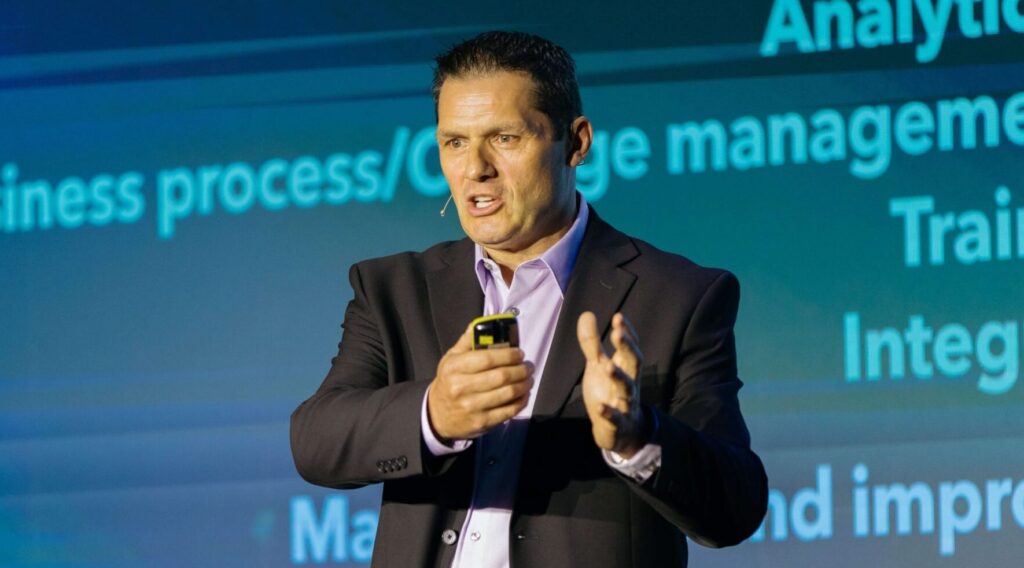
Brazier and McBain’s playful spat was seized upon by partners present as evidence of heightened market uncertainty.
“For me, this was just pointing out that no one really knows, even the researchers. And we’re all just trying to figure it out together,” said Tanaz Gould, CRO at Trustmarque Ultima.
Teeing up presentations from Omdia colleagues Matthew Ball and Robin Ody, McBain said the cybersecurity services sector is growing at 12%, and managed services at 10%.
The AI-related services sector will produce the fastest growth of all, swelling at a CAGR of 32.5% to hit $347bn by 2031, McBain added.
“The balance will shift back towards the channel”
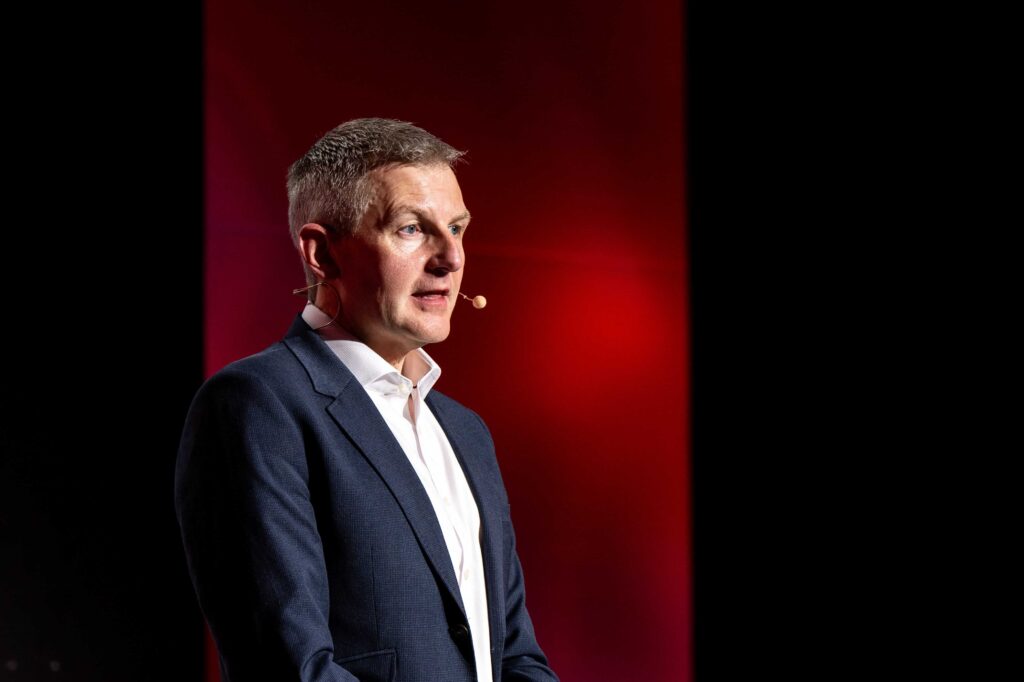
In his keynote, Omdia Chief Analyst Alastair Edwards also struck an optimistic tone as he predicted the balance of power will shift back to partners following a spell where vendors have held all the cards.
Several inflection points – including the move towards sovereignty and the AI infrastructure boom – will be heavily dependent on partners, he stressed.
“We’ve seen the balance of power shifting over the last 12 months from the channel ecosystem to the vendor world, and vendors have been putting more stringent terms [when it comes to] pricing and quotation,” Edwards said.
“But we actually see this balance starting to shift back towards the channel.”
Although Edwards characterised the technology industry as a “rocket ship at the moment”, he warned that not everyone will keep pace with the 35% growth the market is set to record in 2026.
Distributors are “coming into their own”, he said, not only because of the “critical role” they are playing in creating availability and supply, but also around financing, Edwards said.
“Distributors are critical to helping partners finance that business, but in many cases, the size of those deals is beyond the financial capabilities of the average reseller,” he said.
Up to 30% of the existing partner base will “disappear” by 2030 because they can’t transform quickly enough, Edwards predicted.
“My recommendation to all of you is to start thinking today about how you can prepare for this opportunity,” he concluded.

Doug Woodburn is editor of IT Channel Oxygen










Comments 3