The rise of forward-deployed engineers (FDEs) represents a curate’s egg for the channel.
While vendor efforts to build direct services capabilities will naturally spark concern among partners, the rise of vendor-employed FDEs could – conversely – be the key to their success in AI.
In the last few months, a succession of big software and hyperscaler vendors have announced eye-watering investments in FDEs as they seek to turn AI proof of concepts into revenue.
Anthropic at the start of this month said it will invest $100m in training 10,000 FDEs, with OpenAI, Salesforce, SAP and AWS all announcing similar initiatives in the last six months.
Unsurprisingly, the three-lettered buzzword – which was originally coined by Palantir – was a dominant talking point at Canalys Forums EMEA earlier this month.
But do the analysts and panellists at the event view them as a threat or a tonic for the channel?
Here we round up six key FDE-related soundbites from the event…
“You can’t go and spend $7tn to build out something that isn’t driving outcomes”
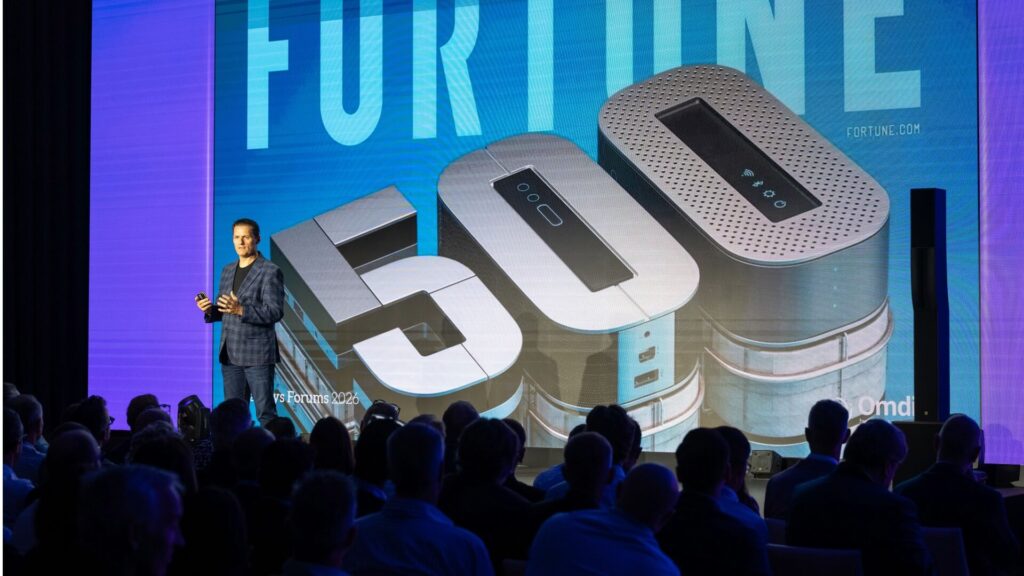
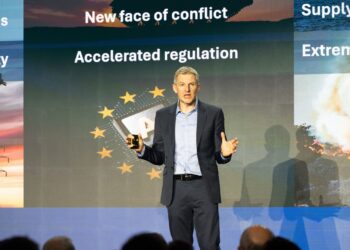
During his morning keynote, Omdia Chief Analyst Jay McBain spelled out why the big AI and software vendors are investing billions into building huge FDE teams.


“You’re seeing billions of dollars being announced all over the place in these direct services, on top of the partner enablement of billions of dollars. But it’s coming back to how do we get customers to their outcomes,” he explained.
Ultimately, there is not (yet) enough supply in the channel to meet AI demand, McBain said.
Some 82% of partners Omdia surveyed said they weren’t fully ready to match the 32.5% CAGR predicted for the AI services market over the next five years, he stressed.
“There are a million reasons for that. It’s pointing at perhaps lack of vendor enablement, perhaps we don’t have enough hands-on sandboxes, training workshops, all kinds of things. But there’s a bunch of demand that right now has trouble in terms of supply.
“Obviously, the vendors responded to this really quickly.”
“These FDE investments – these billions of dollars that are coming in – are going to stop”
The leading AI companies will ultimately want to remain technology companies and not retain large services companies in the long term, however, McBain went on to say.
“It’s actually a drag on their valuation,” he said.
“If you’re worth 10, 20 or 50x, you don’t want to build a 1x services business – but they’re solving an immediate problem.
“By 2030, we see this shifting back to the channel.”
“More than half of you think that FDEs will help you create more opportunities in the next few years, and not replace you.”
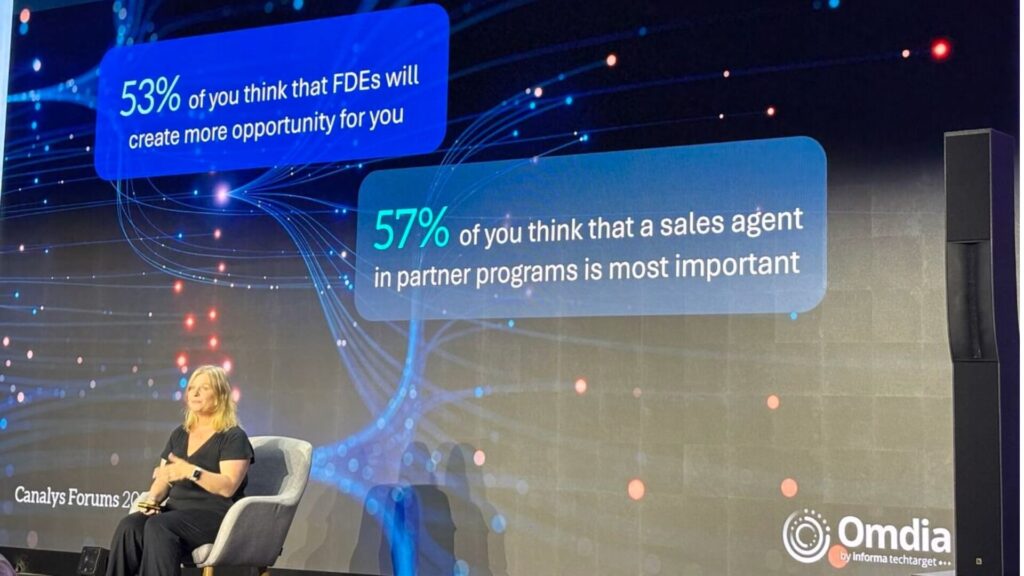
In her keynote, Omdia Senior Research Director Rachel Brindley claimed partners generally view vendor FDEs in a favourable light.
“They will become one of those partners around the table, helping customers to move their PoCs to production, and then stepping away and letting you continue to do those services,” she said.
“I would encourage you to go see what it’s like to be a forward-deployed engineer at a partner like Accenture or PwC or 66degrees or TENEX.”
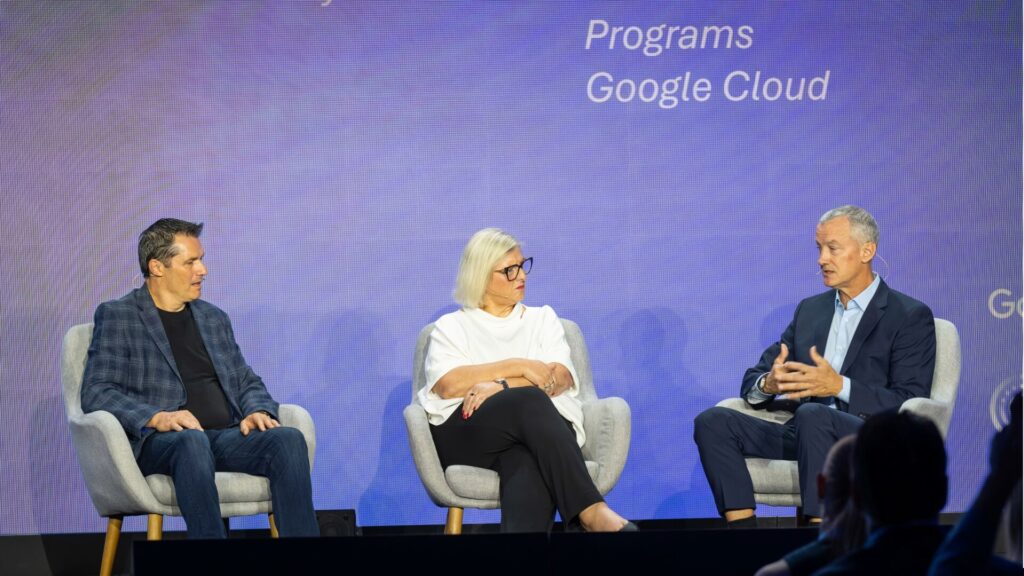
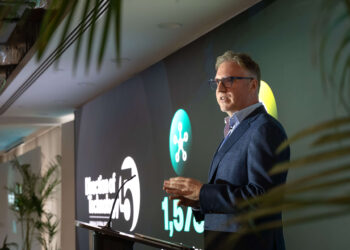
David Smith, Head of Global Channels & Programmes at Google Cloud, used the event to announce that Google is launching a new Professional Agentic Architect certification aimed at building AI services capabilities in the wider channel.
It forms part of a $750m investment Google announced in April. to accelerate partners’ agentic AI development.
“This is the exact same training we’re working on with [the firms listed above], and we’re now bringing to you in this room,” Smith said during a Q&A on stage with McBain and TD Synnex European President Miriam Murphy.
“Forward deployed engineers today are making a half a million dollars in salary in some locations.”
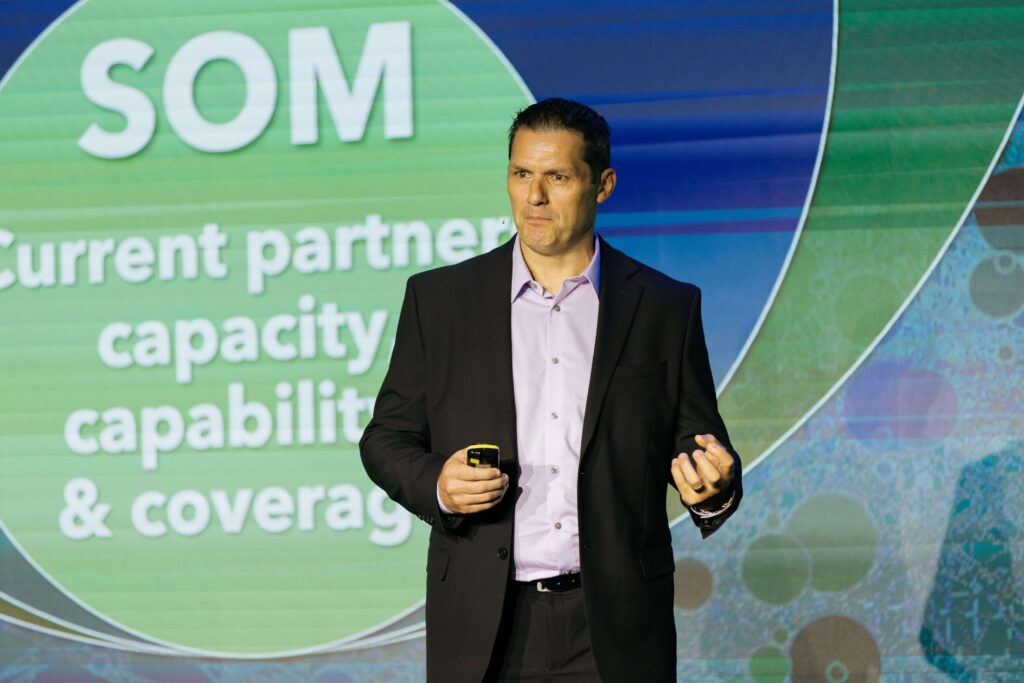
A lack of people talent is the “number one reason” why AI projects are failing right now, McBain said as he sought to explain the bumper salaries FDEs currently command.
“When I think about FDEs, I think about a superhuman in a way, with super talent”

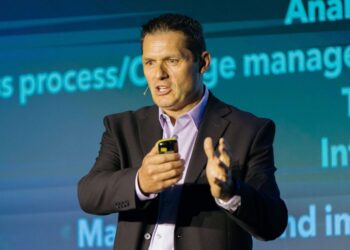
FDEs are “really deeply immersing themselves in the platform and the application and what it means for customers to realise their full potential leveraging this wave of technology that’s coming”, Smith said.
But the modern FDE will be more use-case specific than in the past, he predicted.
“You might have thought of FDEs as being horizontal – for instance they could know infrastructure for Google Cloud or security for Google Cloud,” he said.
“I think the modern FDE is very use-case specific – think down to the sub-vertical in a large enterprise customer.”
The FDE is a concept partners can “internalise” in their own organisations, Smith added.