The influence of channel partners is “growing”, even as the channel’s share of total tech spending shrinks, an analyst has asserted.
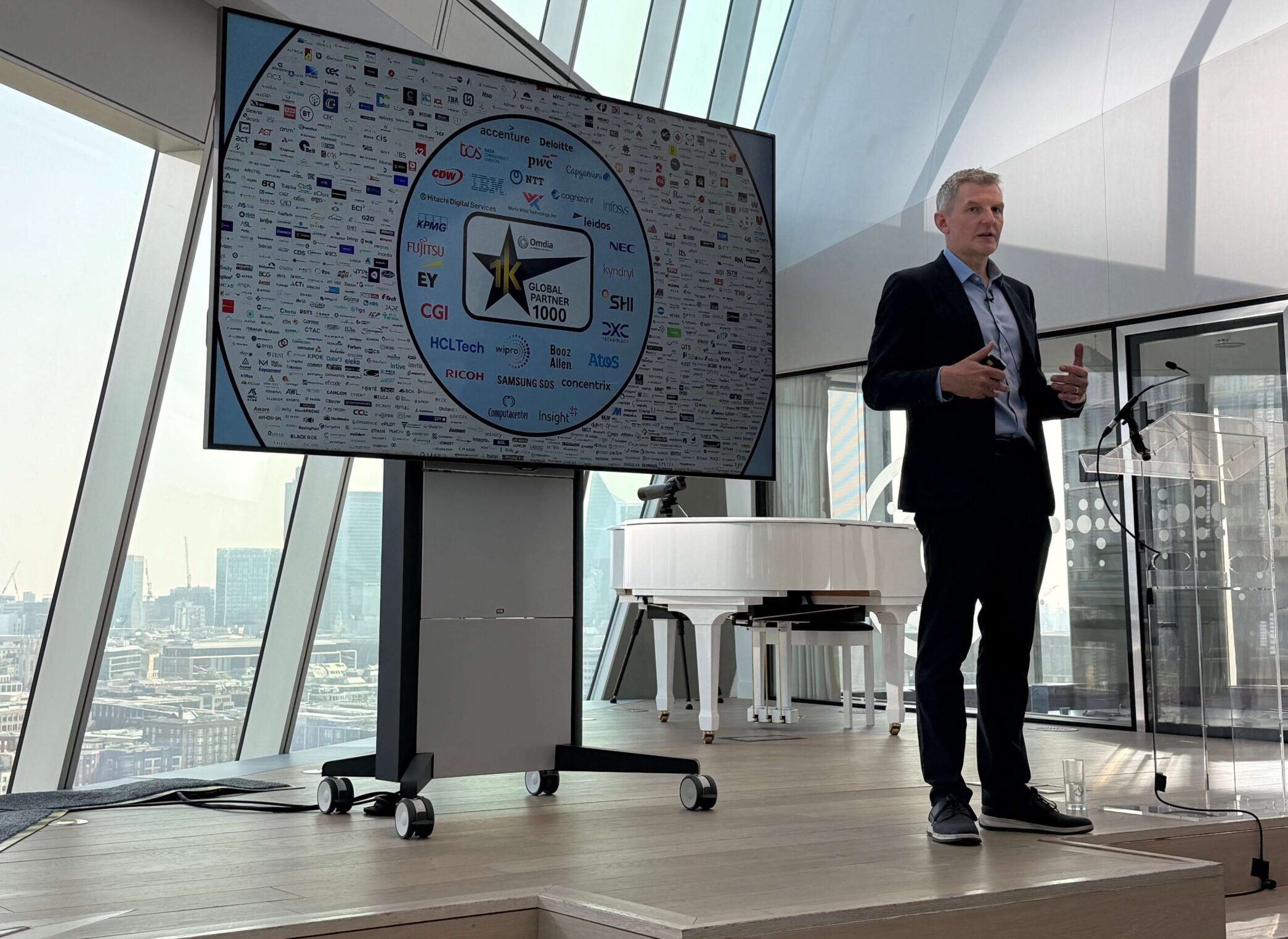
Talking at an Omdia event on Friday, Omdia Chief Analyst Alastair Edwards picked out several growth hotspots for the channel despite warning its share of the total IT pot is shrinking.
Some 65% of tech spending will flow through the channel in 2026, down from close to 70% in 2025, Edwards said. That’s set to drop to 63% in 2027, he said.
“But there are some specific drivers here which are really important to understand, because while that share is declining, actually, we see the level of influence… growing within customer environments, within enterprises, within public sector,” he said.
“That’s a really worrying statistic”
Omdia recently raised its growth projection for the overall IT market this year to 13% amid surging hyperscaler investment in AI infrastructure.
Edwards shared two reasons why the channel’s tech share is waning, both of which relate to AI.
Firstly, the hyperscaler and large neocloud build outs set to fuel an expected 60% hike in server sales this year are largely being done direct by the infrastructure, GPU and networking vendors, Edwards said.
Secondly, large tech vendors are cutting out the channel by building direct forward deployed engineer (FDE) teams to help customers adopt AI.


“There’s a sense that the best way to do that is direct. This is a kind of a call out to the channel partners, to systems integrators, to specialists, that the skills needed to drive that AI adoption are just not there yet,” Edwards said.
While Omdia data suggests that 65% of partners grew revenue in Q2, much of that was driven by upfront spending by customers wanting to secure access to infrastructure ahead of potential supply crunches, Edwards warned.
“Looking into the second half, the channel is less positive. Actually, half of partners that we surveyed in EMEA expect their revenue to decline in the second half this year,” he said.
Some 53% of partners told Omdia that the majority of their customers are cutting back or delaying IT spend, Edwards added.
“That’s a very worrying statistic,” he said.
“The only way they can do that is through partners”
Within the two-thirds of tech spend controlled by the channel, there is “real growth, real adoption and real value” partners are delivering, Edwards went on to say, however.
Although partners may be locked out of the majority of hyperscale build outs, Omdia is seeing “a lot of growth” in some of the larger VARs and systems integrators serving regional neocloud companies.
“More generally, in the enterprise space, the only way that enterprise organisations and public sector companies can actually prepare themselves for the future is by modernising their IT, by investing in the next generation platforms, solutions, services, and software to support the move into an AI world… and the only way they can do that is through partners.”
Here in Europe, end customers are looking for support from partners to increase the level of resilience in their business, Edwards said, adding that this is something “vendors can’t do directly”.
The topics they’re most concerned about include not only cybersecurity, but also vendor lock-in and supply challenges around availability of hardware.
“There is a real fear that by exposing yourself to US hyperscalers and cloud providers, that’s a clear risk in terms of the threat from the US’ administration’s decisions around access and supply,” Edwards added.
While taking from partners with one hand, AI is giving with the other, Edwards indicated.
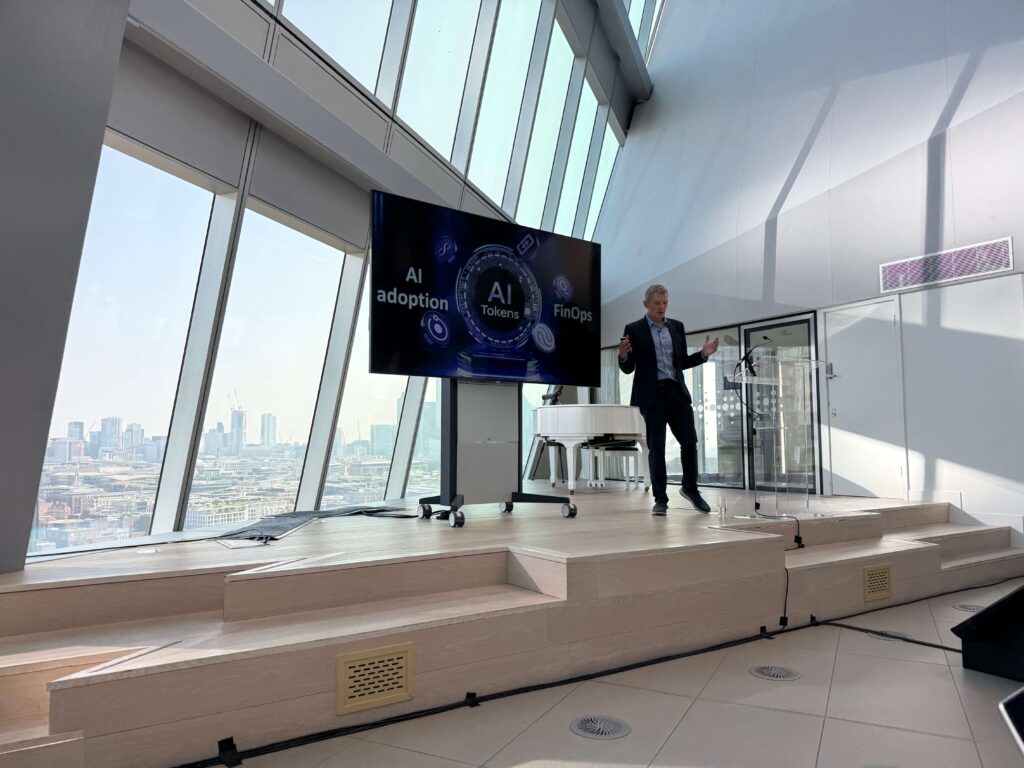
The rise of AI tokens is spawning a “new era of FinOps opportunities” to ensure customers manage or define the right AI cost structure, Edwards said.
“It also translates into what’s the right infrastructure layer for the future for an AI-led organisation,” he said.
“If you’re exposed to the big public LLMs running on hyperscalers, you’re entirely exposed to the massive increases that could come from that sort of token consumption. So what we’re seeing now is a lot of discussions around how you build a more open source-led model, perhaps delivered on your own infrastructure.
“So partners are actively talking to customers about how they can build that next generation infrastructure layer for AI.”
“Not every partner can deliver this”
Edwards began his keynote by using the “AI-enabled edge device” that is the World Cup football to illustrate the growing opportunity facing the tech channel in the AI era.
“This is just one of the many use cases we see now in the tech world, where AI- where connecting technologies – are being deployed in almost every environment. And this isn’t just being delivered by one company or provider; it’s being delivered by multiple partners,” he said.
These emerging opportunities will create winners and losers in the channel, Edwards emphasised.
“Ultimately, what I’m talking about here, what I’m presenting, is a very complex, difficult picture, and not every partner is going to be able to deliver this or build the capabilities. And very few are going to have the capabilities to do all of this,” he concluded.

Doug Woodburn is editor of IT Channel Oxygen