

RAMageddon has “supercharged” the shift to refurbished hardware, in a development that could pose a “structural threat” to margins in the channel, an analyst has claimed.
According to fresh research from Omdia, 83% of customers have altered their hardware refresh plans in direct response to ongoing supply and pricing disruptions (see graph, bottom).
Of these, 55% are delaying refreshes in the hope the market stabilises.
But another 14% are “trading down” – ie plumping for cheaper configurations or entering the refurbished market, Omdia Chief Analyst Jay McBain noted in a LinkedIn post.
Refurbished rethink
UK channel partner leaders present at the recent Oxygen 250 dinner warned the fall out from the memory crisis could last beyond 2030.
This disruption is “causing customers who have previously written off refurbished IT to rethink their attitudes”, Ben Caddy, Senior Analyst – Sustainable Ecosystems at Omdia, wrote.
The secondary market has “matured significantly in the last five years”, Caddy noted.
While bigger channel partners like Computacenter, SCC and Advania are busy building in-house refurbishing and IT recycling capabilities (see here, here and here), vendors including HP are bringing OEM-certified refurbished devices to the wider channel.
“This shift was already happening last year, but RAMageddon has now supercharged it,” Caddy wrote.



Second-user squabbles
But the move away from full system sales represents a “structural threat to margin” for the channel, McBain warned.
“The refurbished path, in particular, moves spend away from the distribution and the manufacturing ecosystem that the channel normally depends on,” he noted.

Caddy agreed, saying the rise of refurbished kit “shakes up the traditional channel selling dynamics”.
“Salespeople need to be ready and incentivised to sell refurbished as well as new, especially as customer interest in non-new hardware is now so high,” he wrote.
Not all market watchers are reporting an uptick in refurbished sales, however, with CONTEXT last month claiming that European refurbished PC unit sales remained “broadly flat” in Q1.
Revenues were up 10%, CONTEXT analyst Jacky Chan said, however.
“Customers are increasingly willing to pay more for higher-quality refurbished devices with stronger specifications, particularly in notebooks. That shift is driving average selling price growth and expanding the premium segment of the market,” Chan said.
Puny pull-forward
Computacenter and Softcat have both acknowledged the positive impact pull-forward purchases have had on their latest numbers.
But Omdia recently warned that a rebound in channel sentiment in Q2 – fuelled by pull-through – may be short-lived as the memory shortage fall out unwinds.
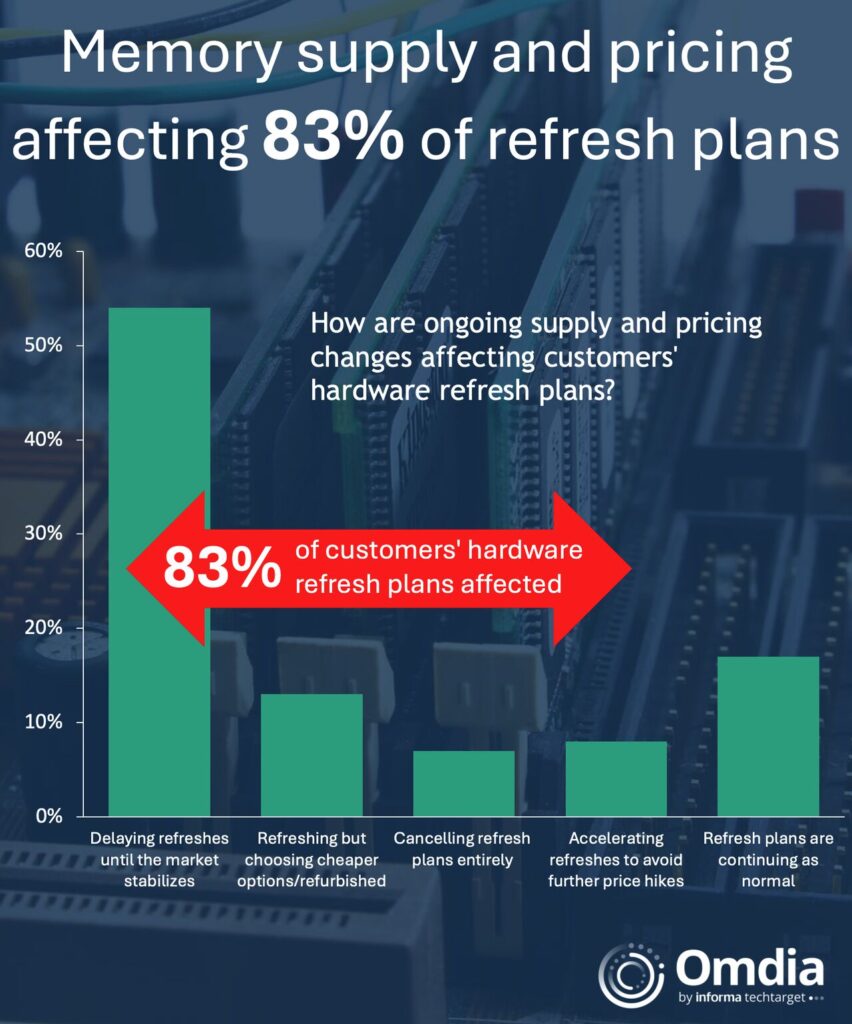
Omdia’s latest data suggests only 8% of customers are accelerating purchases to get ahead of further price increases.
This group “represents a near-term opportunity, but a small one”, McBain said.
“17% report continuing as normal, which means partner teams are effectively serving two very different customer populations simultaneously while managing the same inventory exposure,” he concluded.